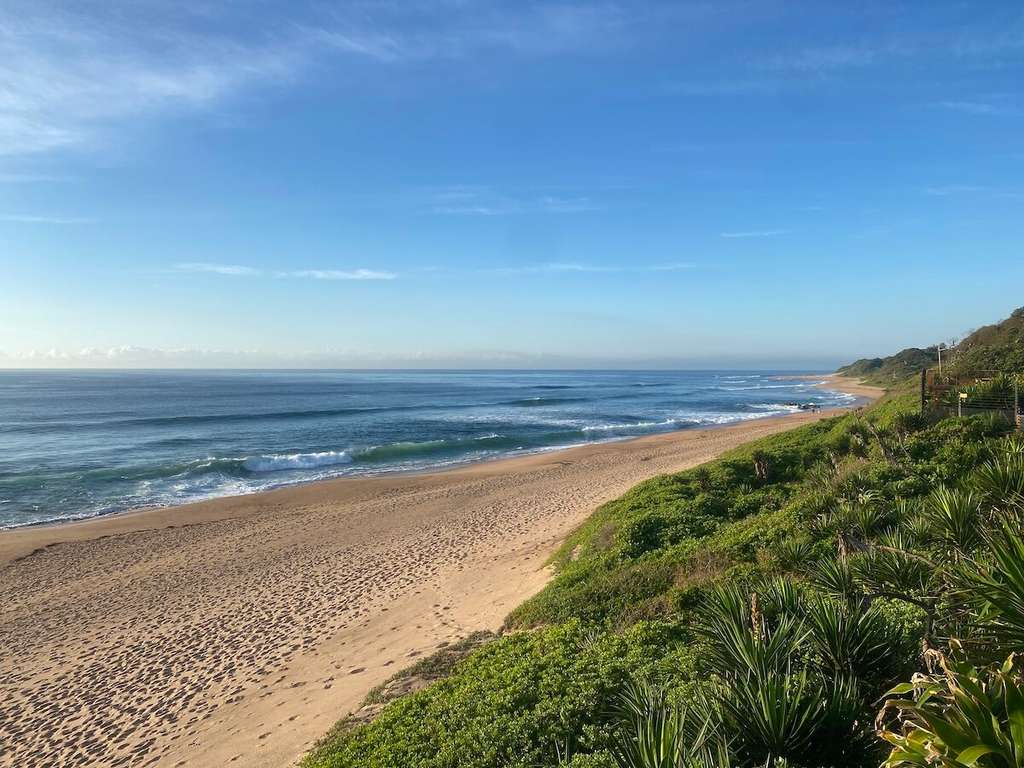
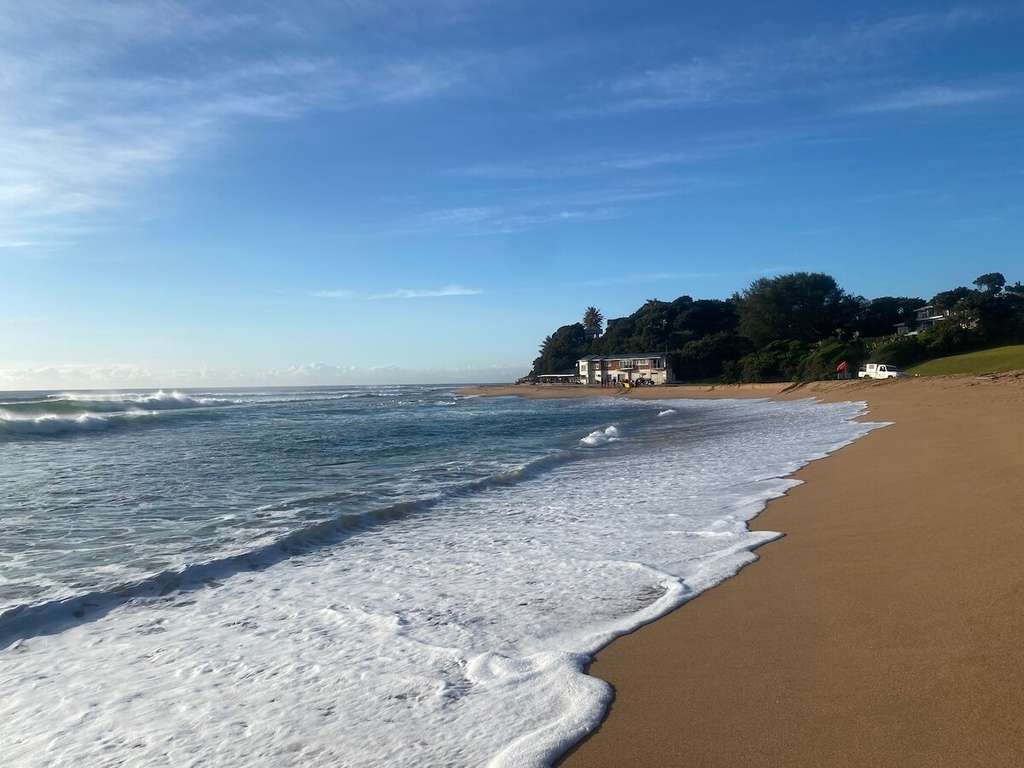
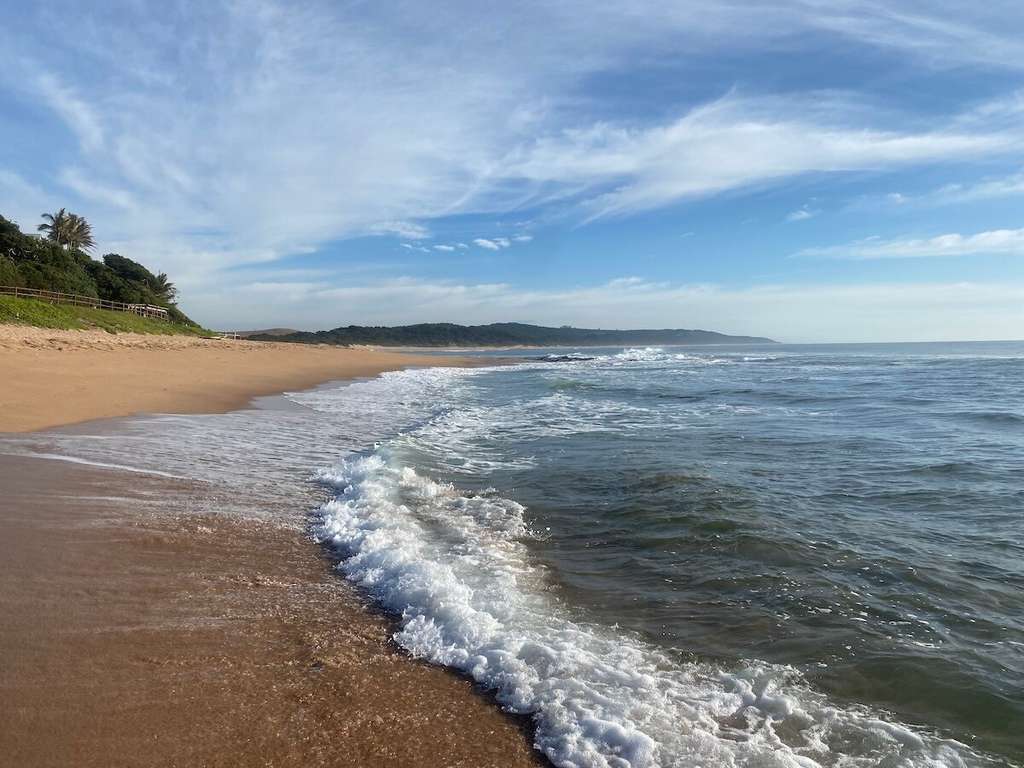
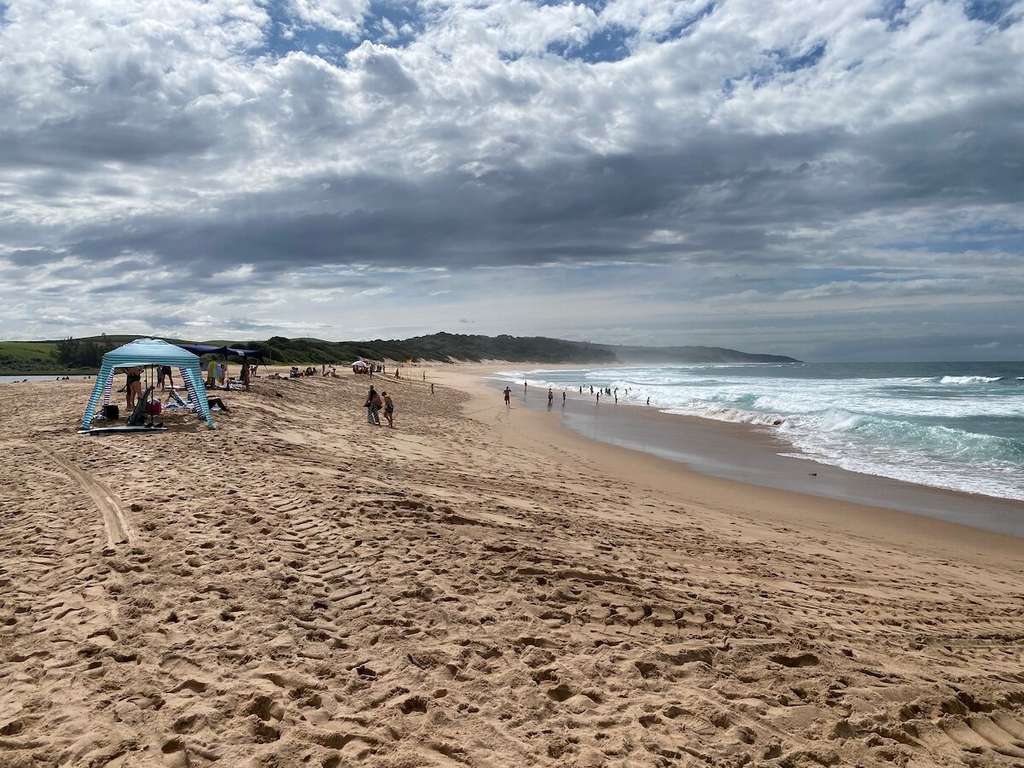
Ask ten people who have been coming to Zinkwazi for years what the best time to visit is and you will get ten different answers. The Joburg family who books the same week every December will tell you nothing compares to the festive season: the village alive, the lagoon full of children, the smell of braai smoke drifting across the beach. The Cape Town couple who discovered Zinkwazi in July will disagree entirely. They come for the dry, clear winter days, the empty beaches, and the humpback whales passing offshore while everyone else is freezing at home in a cold front.
Both are right. The Indian Ocean at Zinkwazi does not drop below 20°C in any month of the year. According to sea temperature data sourced from NOAA satellite readings, the water ranges from 20 to 23°C in winter and 24 to 28°C in summer. You can swim year-round. What actually determines the best time to visit is who you are, what you want, and what you are willing to trade off.
Month-by-month at a glance
The table below covers air and ocean temperatures, rainfall and crowd levels for each month. Zinkwazi Beach weather covers daily and seasonal weather patterns in more depth.
Month | Air temp | Ocean temp | Rainfall | Crowds | Notes |
|---|---|---|---|---|---|
January | 30-36°C | 26-28°C | High | Peak | School holidays. Village at full capacity |
February | 29-35°C | 25-28°C | High | High | Post-New Year. Still busy and warm |
March | 28-33°C | 25-27°C | High | Moderate | Rain easing. Good conditions, fewer people |
April | 26-30°C | 24-26°C | Moderate | Low | Comfortable. Village quietens significantly |
May | 24-28°C | 23-25°C | Low | Low | One of the best months. Quiet, warm, dry |
June | 22-26°C | 21-23°C | Very low | Low-moderate | Driest month. Whale season begins |
July | 21-25°C | 20-22°C | Very low | Moderate | School holidays. Whale peak. Fires at night |
August | 22-26°C | 21-23°C | Low | Low-moderate | Whales still running. Warm days |
September | 24-28°C | 22-24°C | Low | Low | Spring. Water warming. Quiet beaches |
October | 26-30°C | 23-25°C | Moderate | Low | Strong value month. Good conditions |
November | 28-33°C | 24-26°C | Moderate | Low-moderate | Summer building. Shoulder prices |
December | 30-36°C | 26-28°C | High | Peak | Festive season. Fully booked village |
Air temperature ranges and rainfall sourced from the South African Weather Service and observation from year-round residents. Ocean temperatures sourced from seatemperature.net (NOAA satellite data).
December and January: peak season
February and March: summer easing
Water temperatures remain warm and the beach conditions are excellent. Rainfall starts to ease from March onward. Crowds thin noticeably after schools return in late January, and by March the village has the feel of summer without the peak-season pressure. Good value month for those who can travel outside school terms.
April and May: the quiet season
April and May are among the most underrated months on the KZN North Coast. The humidity drops, the rain eases, temperatures settle into the mid-to-upper 20s, and the ocean is still comfortably warm. Zinkwazi becomes noticeably quieter. Accommodation rates drop from peak. For visitors from Johannesburg who want beach weather without the December crowds, April and May consistently deliver.
"A lot of people who live here would tell you May is the best month of the year. The school holidays are done, the Easter traffic has cleared, and most mornings you have the beach entirely to yourself."
June and July: whale season, sardine run and winter school holidays
The sardine run typically moves up the coast from late May to mid-July, peaking in June. When it coincides with the July whale peak, the offshore water off Zinkwazi can be extraordinarily active: sardines, sharks, Cape gannets diving from above, dolphins working bait balls, and humpback whales feeding at the surface. Whale watching on the Dolphin Coast covers the migration timing, viewing spots and what to expect in a good year.
For surfers, June and July are also peak season for the right-hand point break at Zinkwazi. Cold fronts from the Cape produce solid south-southwest groundswells in winter, and the spot can deliver waves of 6 to 8 feet on a good day. Surfing at Zinkwazi covers the conditions and the wave specs.
August and September: whales tapering, spring arriving
Humpbacks begin their southward return from August through November. Sightings continue but at lower density than July peak. The ocean begins warming again from September. By October the water is back to comfortable mid-20s and the beach season is building toward summer. These are strong shoulder months: good conditions, low crowds, reasonable rates.
October and November: pre-summer shoulder
Spring on the North Coast brings warming temperatures and increasing humidity. October is a strong value month: the water is warm enough for most swimmers, the beaches are uncrowded, and accommodation rates are pre-peak. November sees the village beginning to fill as the December holidays approach. The best time to bring the family to Zinkwazi covers the seasonal considerations specific to families with children.
One seasonal note for fishing visitors: shad (elf) is closed for retention from 1 October to 30 November under DFFE regulations across the KZN coast, including Zinkwazi. The fish can still be caught and released but not kept during this period. Fishing at Zinkwazi Beach covers the regulations, the species and the offshore reefs in detail.
Is there a single best month?
Not universally. The right month depends on what you are after.
For water temperature and swimming: December to March.
For whale watching: July, with June and August as secondary options.
For dolphins: any month. Bottlenose dolphins are year-round residents along the Dolphin Coast, with pods of 30 to 50 routinely seen riding the surf.
For quiet beaches and best value: April, May, September, October.
For festive energy: December and January.
For dry weather: June and July.
For surf: May through August (winter swells).
For fishing: any month for most species, with December to September the retention window for shad.
The one consistent finding across all seasons: the ocean is always swimmable, the lagoon is always calm, and the village is always worth the drive regardless of when you arrive. Zinkwazi tide times and conditions cover the daily rhythm that applies year-round.
If you have decided when you want to come, Zinkwazi has many self-catering options including lagoon-side cottages, beach houses, pet-friendly places, and the houses set back in the milkwood forest. Peak season (December and January) books months in advance. Shoulder months (April, May, September, October) are easier to secure on shorter notice.
Frequently asked questions
Published February 24, 2026