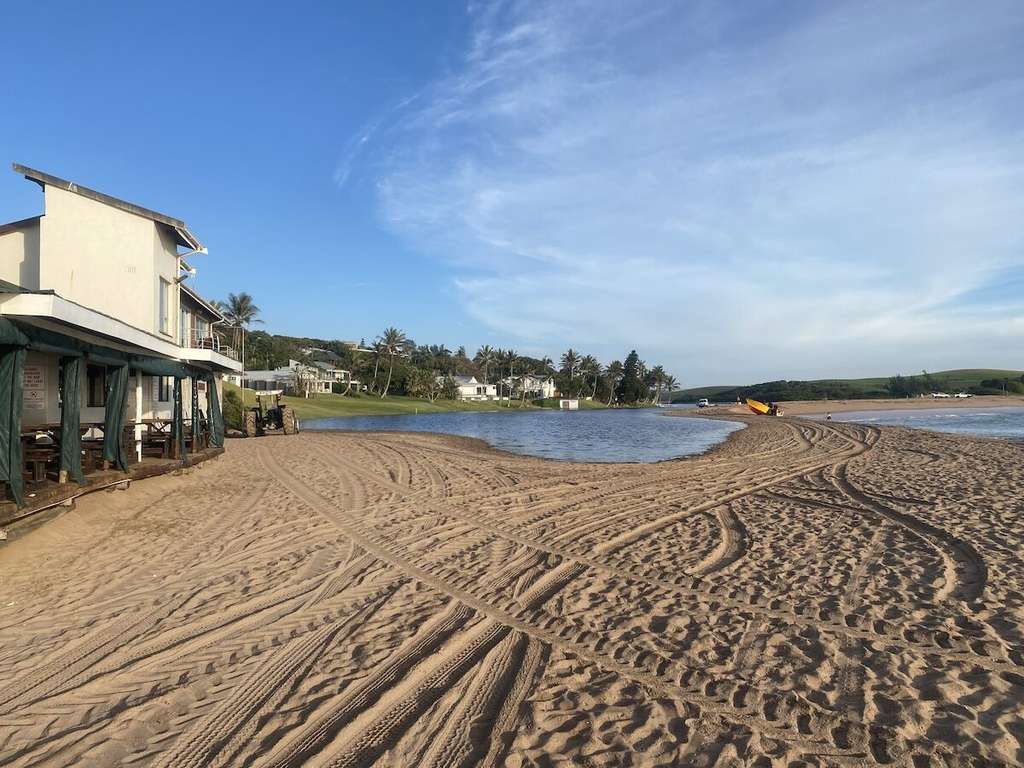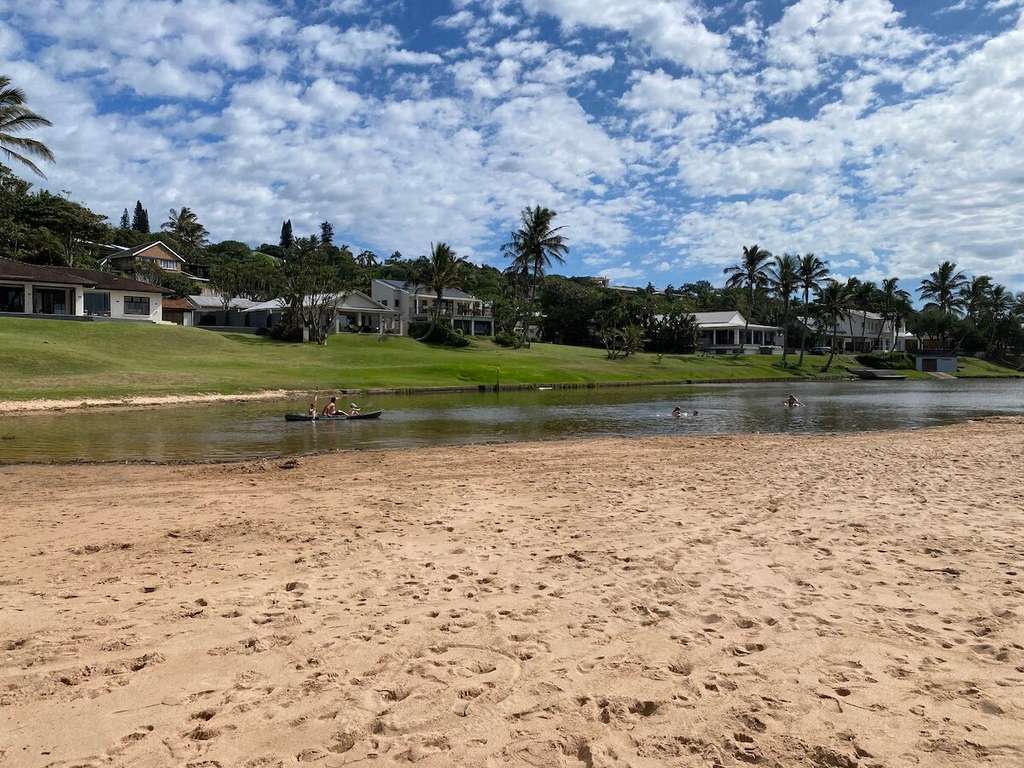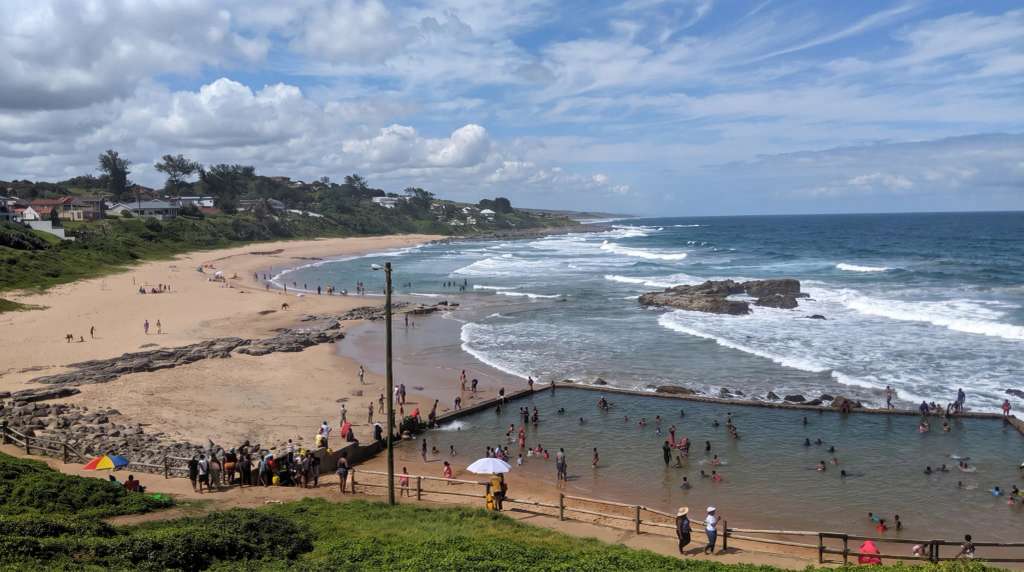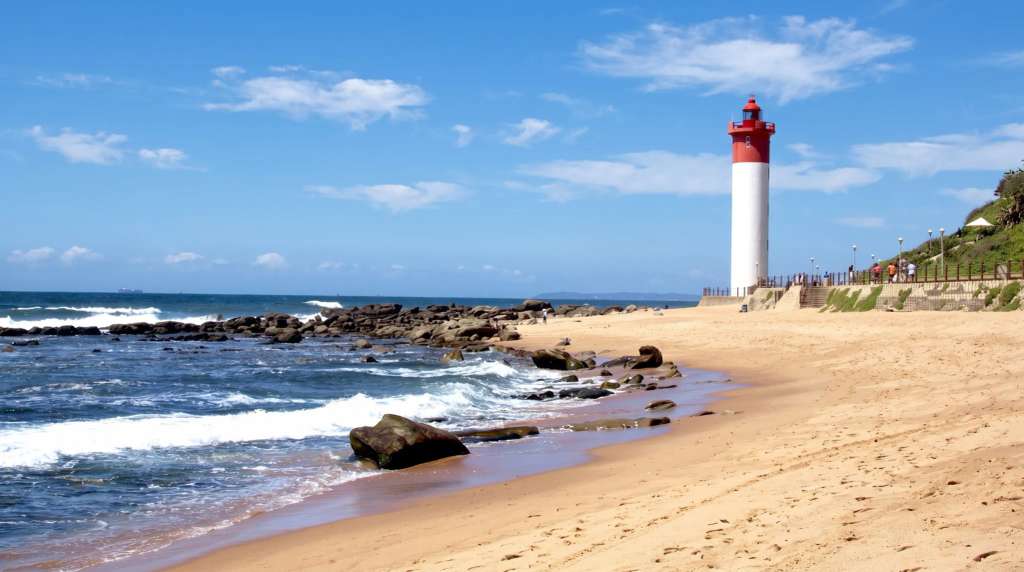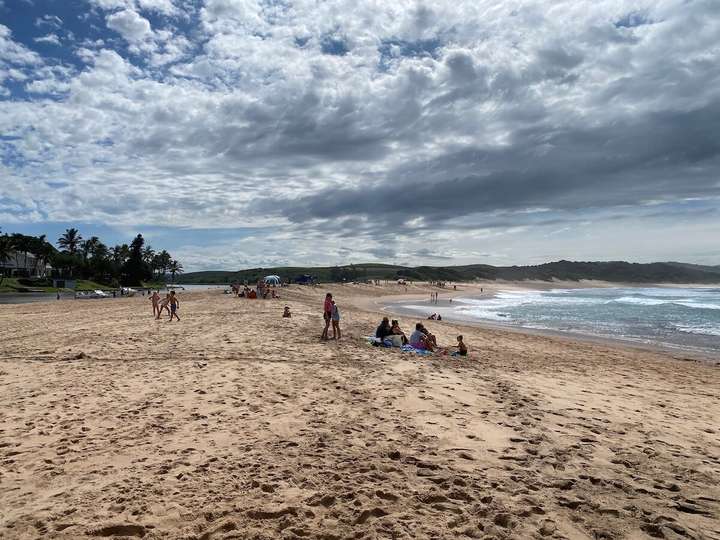
The kids were in the lagoon by 8am. Not the ocean. The lagoon. By 9am the older one had a fishing net in the shallows and the younger one was building something ambitious in the sand at the water's edge. By 10am they had walked the beach, collected a pile of shells, and were asking whether they could set up a proper camp by the lagoon with towels and snacks and stay there for the rest of the day. That was Thursday morning. By Sunday they were asking when we could come back.
This is what a Zinkwazi Beach family holiday actually looks like. Not a resort programme with scheduled activities. Not a waterpark or an entertainment package. A lagoon, a beach, shells to collect, and the kind of unstructured time that children enjoy more than any organised itinerary. For families who have had enough of navigating the busier holiday destinations on the KZN coast, Zinkwazi is the uncomplicated alternative. Arrive, unpack, go to the water.
Why Zinkwazi works for families with young children
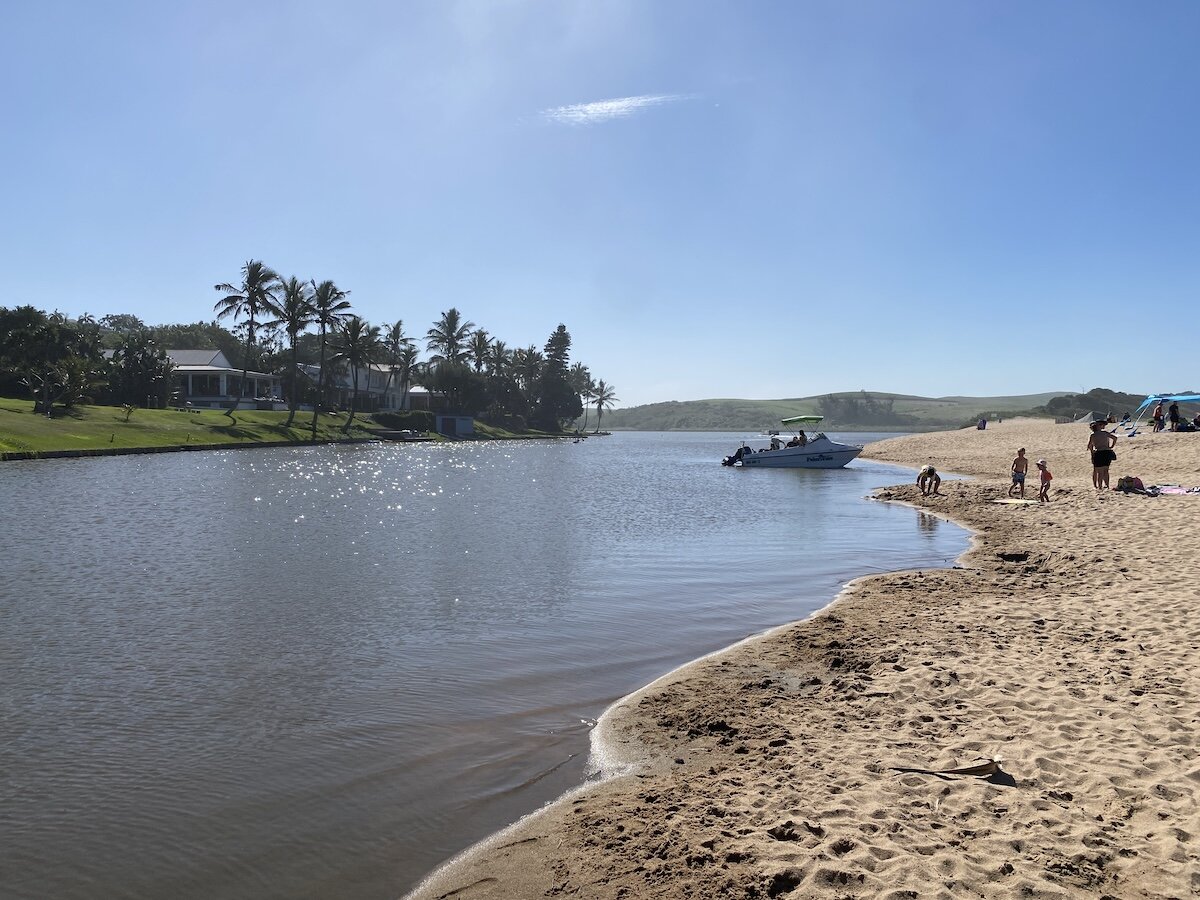
The answer is the lagoon.
Zinkwazi Lagoon runs approximately eight kilometres inland from the beach mouth, warm and shallow year-round. The water rarely drops below comfortable swimming temperature, the surface is almost always still, and there are no rip currents, no surf, and nothing to navigate. Young children wade in knee-deep water, kick balls around, and explore the edges for hours without anyone needing to watch the horizon.
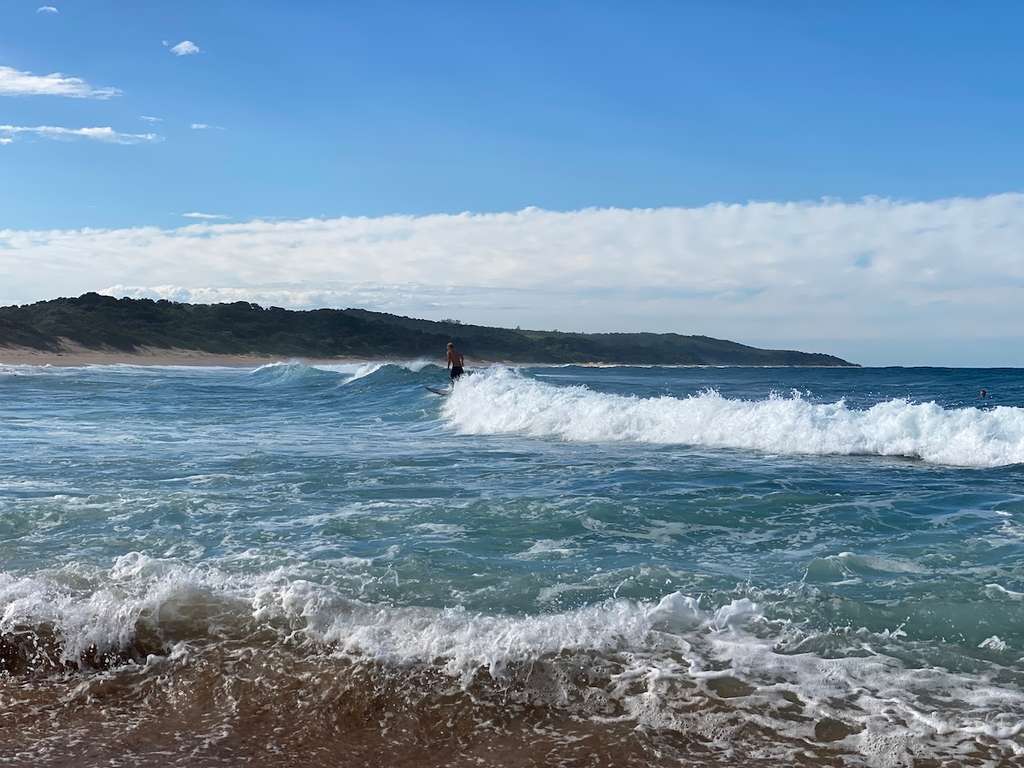
Lifeguards are stationed at the main ocean beach to the north, between the lifesaving flags. They are not stationed in the lagoon itself.
Parents supervise children in the lagoon directly. This is worth knowing before you arrive: the lagoon is gentle, but it is not staffed. Whether Zinkwazi Beach is safe for children covers every swimming spot in detail.
The village itself is small and self-contained. There are no busy roads to navigate between the accommodation and the water. Most properties are a short walk from the lagoon or the main beach, and the roads are quiet enough that children on bicycles are a normal sight in the early mornings.
What children actually do at Zinkwazi
The list is longer than most families expect before they arrive.
Under 5s, the lagoon: The lagoon is where very young children spend most of their time. Warm, shallow, still, and completely manageable for toddlers in knee-deep water. Fishing nets, balls, sandcastles. The pool at your self-catering property tends to be the morning option before the lagoon becomes the obvious choice for the afternoon.
6 to 12s, the whole village: swimming in the lagoon and the main beach, riding the outgoing current on boogie boards when the lagoon mouth flows to the sea (parents supervise closely), walking north to the Boiling Pots, exploring the rock outcrops at low tide for crabs and sea anemones, the milkwood forest trails. At this age Zinkwazi fills a week without effort.
Sugar Bay Holiday Camp
The best self-catering for families at Zinkwazi
Self-catering suits family travel in a way that hotels do not. Your own kitchen means you control meal times and food costs. Your own braai means the kind of evening that does not require a booking. Your own stoep means the children can move freely between inside and outside without worrying about other guests.
What to look for when choosing a family property at Zinkwazi:
A private pool matters more than proximity to the beach for families with very young children. The pool is where the under-5s spend most of their time before the lagoon becomes familiar. Fenced pools are worth specifying if you have toddlers. If you are travelling with a baby, four properties list a cot: 125 Nkwazi Drive, 23 on Glen Drive, Rosie’s Place and Zinkwazi Beach House. Three of the four have no pool at all, which some parents of very small children will read as a feature rather than a gap. Confirm the cot with the host either way. For larger groups, properties sleeping 10 or more are available and typically better value than booking multiple smaller units.
The Beach House (five bedrooms, sleeps 10, family-only) and Milkwood Bungalow (four bedrooms, sleeps 12, under the indigenous milkwood forest with private pool and direct beach access) are two examples worth a look. Lagoon-facing properties put the morning routine within walking distance of the water without crossing any roads.
Browse the full range of self-catering stays at Zinkwazi Beach.
Most families arrive with a plan and abandon it by the second morning. The lagoon has a way of making schedules feel unnecessary.
What to pack for a Zinkwazi family holiday
Subtropical heat means sun protection is the non-negotiable. UPF-rated rash vests for children in the water, SPF50 applied before they get anywhere near the lagoon. The North Coast sun is strong even in overcast conditions.
Fishing rods are worth bringing for older children and adults. Shore angling along the lagoon edge and at the main beach produces shad and kob, and Zinkwazi Dive Charters runs deep-sea trips when conditions allow.
Bring groceries from KwaDukuza or Ballito on the way in. There is no supermarket in Zinkwazi village. The Zinkwazi Beach Cafe on Glen Drive carries convenience items only. The nearest major shops are at KwaDukuza Mall, approximately 15 to 20 minutes back toward Durban on the N2. Shops and services near Zinkwazi Beach has the full list, and the Zinkwazi Beach visitor checklist covers the broader pre-arrival checklist for first-time visitors.
Most properties provide braai facilities. Braai wood can be bought from any supermarket on the way in.
The best time to bring the family
December and January are peak season. Prices are highest, the village is at its most lively, and the water is warmest. If this is when you can travel, book accommodation well in advance. The best family properties fill months ahead.
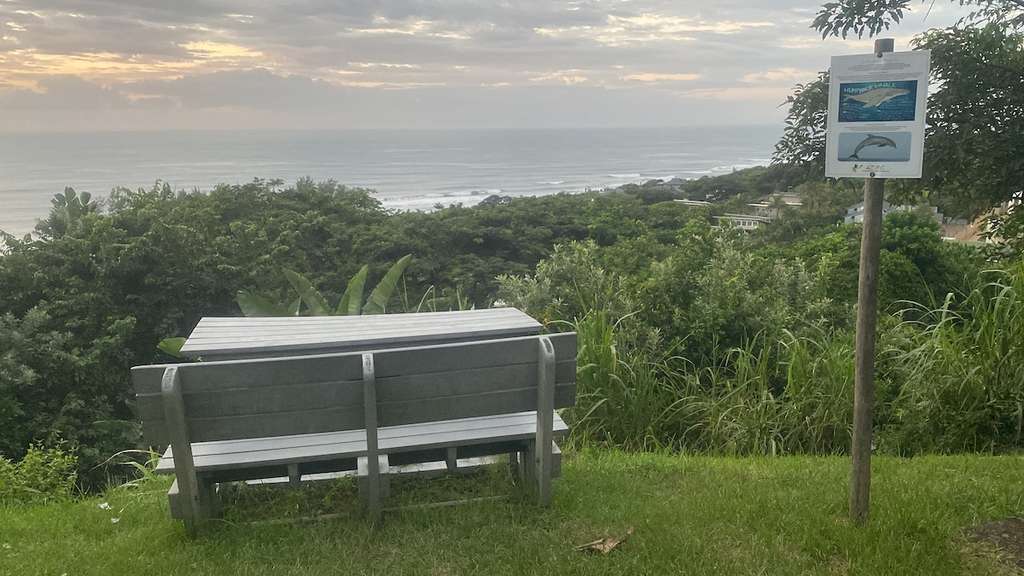
July is the school mid-year holiday. Cooler days in the mid-20s, dry weather, and the start of humpback whale season. A good option for families who find December too busy and too expensive.
September, October, February and March are the best-value months for family travel. The weather is warm, the water is swimmable, and the village is noticeably quieter. Rates drop, the lagoon is less crowded, and children have more space. The best time to visit Zinkwazi with children covers each month in detail.
If you are planning a Zinkwazi family holiday, Zinkwazi has many self-catering options including lagoon-side cottages, beach houses, pet-friendly places, and the houses set back in the milkwood forest.
Frequently asked questions
Published September 1, 2026