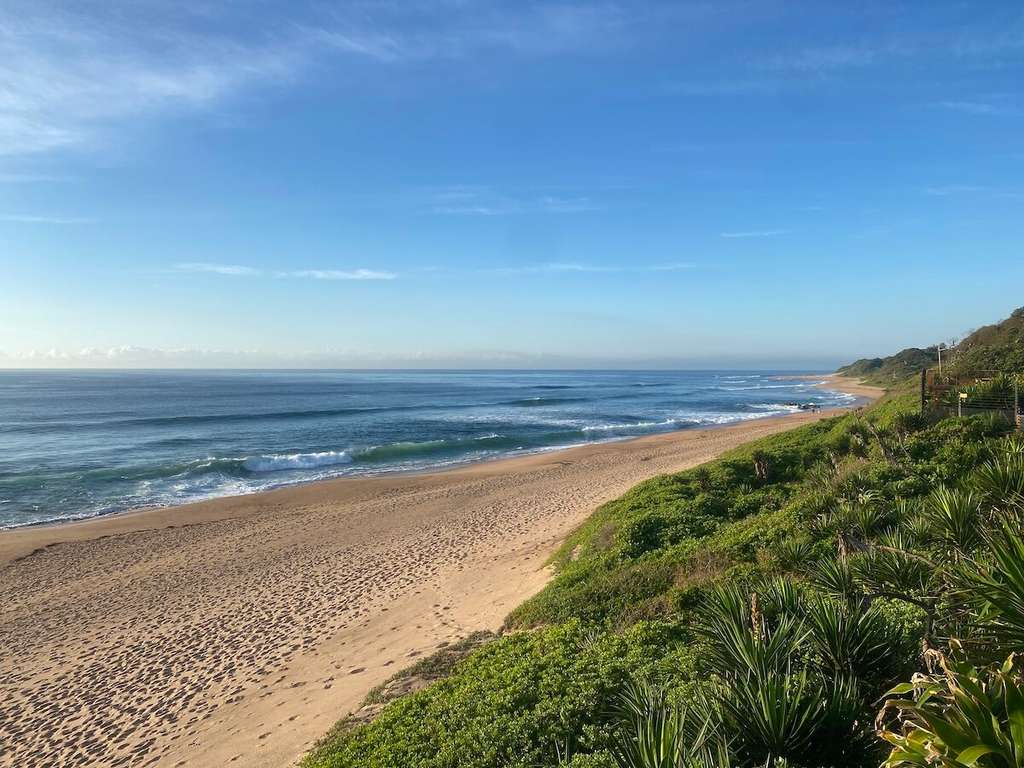
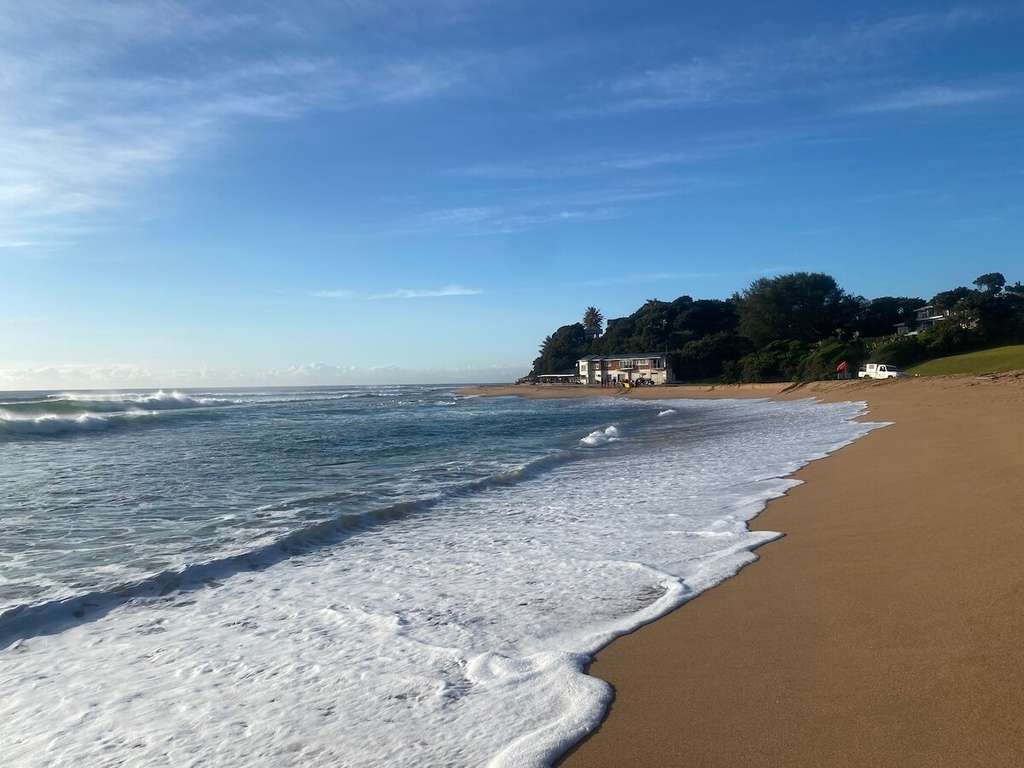
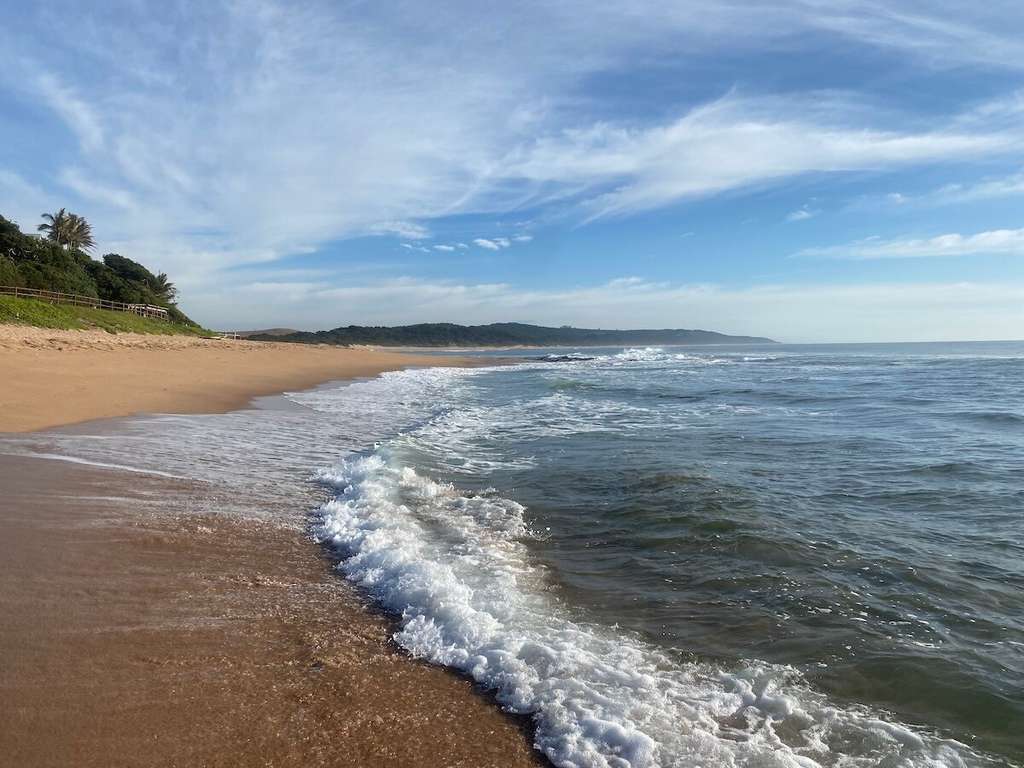
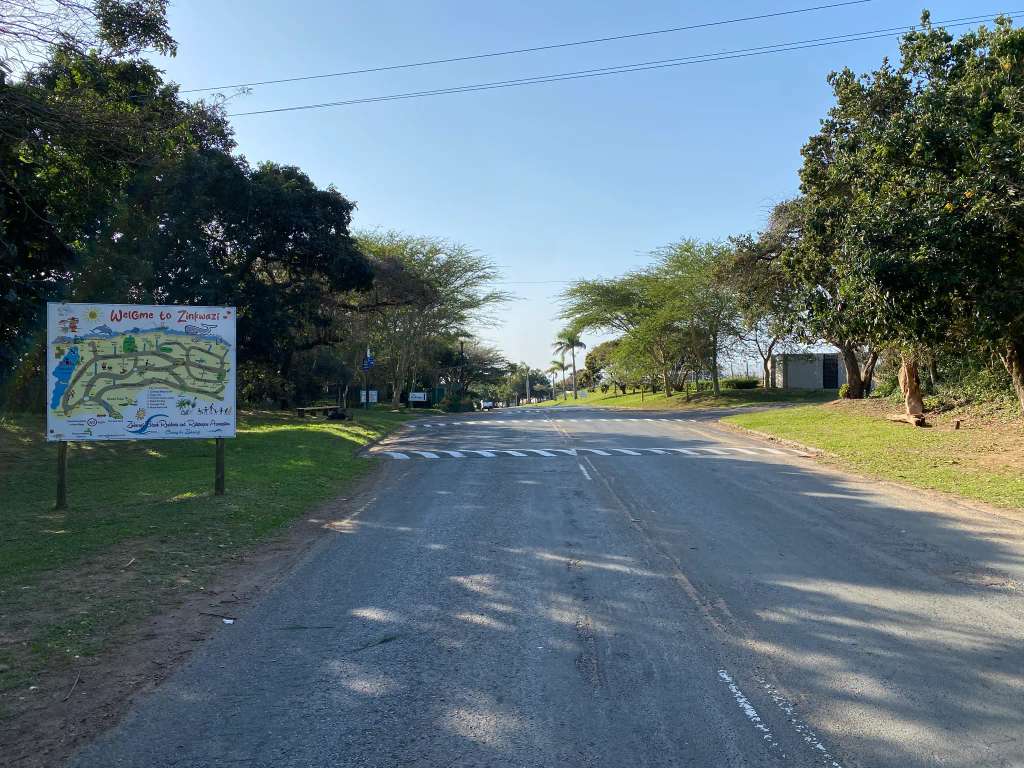
The Indian Ocean at Zinkwazi Beach does not drop below 20°C. Not in July, not in any month. NOAA satellite data puts the range at 20 to 23°C in winter and 24 to 28°C in summer. That one fact decides the trip for most people coming up from Cape Town or down from the Highveld. Swimmable water year-round changes the maths.
Zinkwazi Beach weather is humid subtropical. Roughly 965mm of rain a year, almost all of it falling in summer thunderstorms. What actually varies between seasons is the humidity, which way the wind is coming from, how aggressive the UV is, and whether there are whales offshore. This guide covers the conditions. For the broader question of when to come (crowds, prices, who else will be in the lagoon), the best time to visit Zinkwazi weighs all of it together.
What does Zinkwazi Beach weather look like month by month?
Month | Air temp | Ocean temp | Rainfall | UV Index | Notes |
|---|---|---|---|---|---|
January | 30–36°C | 26–28°C | ~115 mm | Extreme (14–15) | Peak summer |
February | 29–35°C | 25–28°C | ~130 mm | Extreme (14–15) | Wettest month |
March | 28–33°C | 25–27°C | ~125 mm | Very high (10–11) | Rain easing |
April | 26–30°C | 24–26°C | ~75 mm | High (8–9) | Comfortable autumn |
May | 24–28°C | 23–25°C | ~55 mm | Moderate (6) | Quiet, warm, dry |
June | 22–26°C | 21–23°C | ~35 mm | Moderate (5–6) | Driest, whales begin |
July | 21–25°C | 20–22°C | ~35 mm | Moderate (5–6) | Whale peak, school hols |
August | 22–26°C | 21–23°C | ~45 mm | High (7–8) | Late winter |
September | 24–28°C | 22–24°C | ~65 mm | High (9–10) | Spring, warming |
October | 26–30°C | 23–25°C | ~85 mm | Very high (10–11) | Strong value month |
November | 28–33°C | 24–26°C | ~110 mm | Extreme (12–13) | Summer building |
December | 30–36°C | 26–28°C | ~115 mm | Extreme (14–15) | Peak summer |
Air temperatures and rainfall sourced from Weather Atlas KwaDukuza climate records and the South African Weather Service. Ocean temperatures from seatemperature.net (NOAA satellite data). UV Index ranges based on long-term KwaDukuza climate records. Live conditions at Zinkwazi are updated daily here.
Summer weather (November to March)
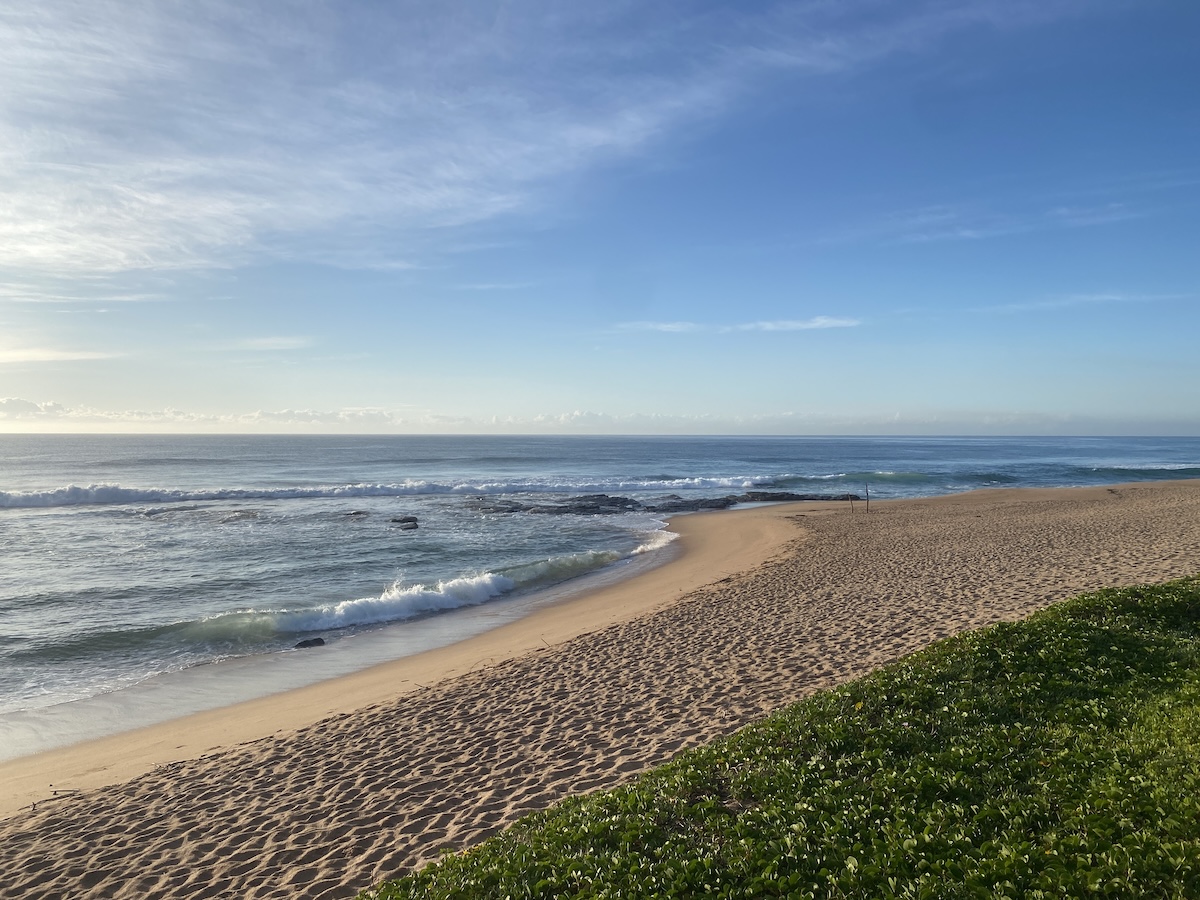
Summer is the version of Zinkwazi most people come for and the one most people underestimate. By 10am in January the humidity is sitting at 80 per cent, the deck tiles are already too hot for bare feet, and your second shirt of the day is a foregone conclusion. Temperatures run into the mid-30s through December and January, higher on a berg wind day. The ocean is at its warmest of the year. The lagoon is warm before breakfast.
The afternoon thunderstorm is summer's defining event. It builds through the morning as cumulus stacking over the sugarcane inland, breaks somewhere between two and five, rolls through in twenty minutes of serious rain, and leaves the air washed clean and thirty-one degrees at six in the evening. February pulls in around 130mm across fifteen rainy days, almost all of it delivered in this pattern. You do not sit inside for three days waiting it out. You wait twenty minutes and go back to the beach.
Then there is the sun. The UV index at Zinkwazi hits 14 to 15 in December, January and February, well past the 11+ threshold the World Health Organisation calls extreme. Unprotected skin starts damaging in under thirty minutes at midday. SPF50 is the baseline. Reapply every two hours. Rash vests for children in the water. Midday under a roof of some kind if there is one going. Half a beach holiday can be lost to the sunburn that happened on day one.
What to pack for summer: SPF50, UPF rash vests, a wide-brimmed hat you can actually tolerate wearing, a light waterproof layer for afternoon storms, insect repellent for evenings near the lagoon.
Autumn weather (April and May)
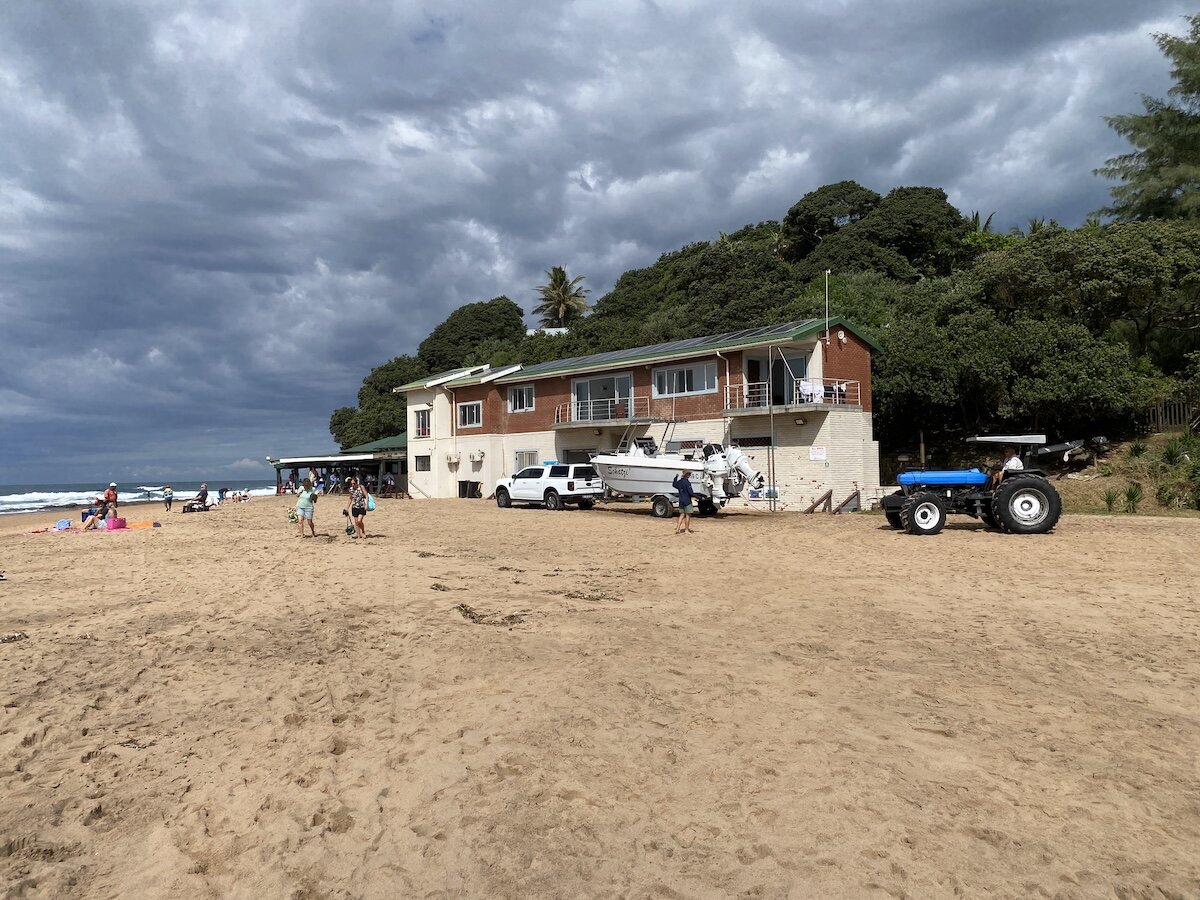
April hands you back the thing summer took. Humidity drops ten to fifteen points, rain falls back to 55 to 75mm a month, temperatures settle into the mid-to-upper 20s. The ocean is still warm. What really changes is the quality of the air. Mornings are dry. Afternoons stay hot but you can walk in them. By May the sticky film summer leaves on everything is gone.
"May is the month the regulars talk about. The humidity is gone, the rain is done, the school holidays are finished, and the beach is yours."
What to pack for autumn: Light clothes for the day, a long-sleeved layer for evenings. Sunscreen. The April sun catches people out even when the air feels cooler, the UV is still reading 8 to 9.
Winter weather (June to August)
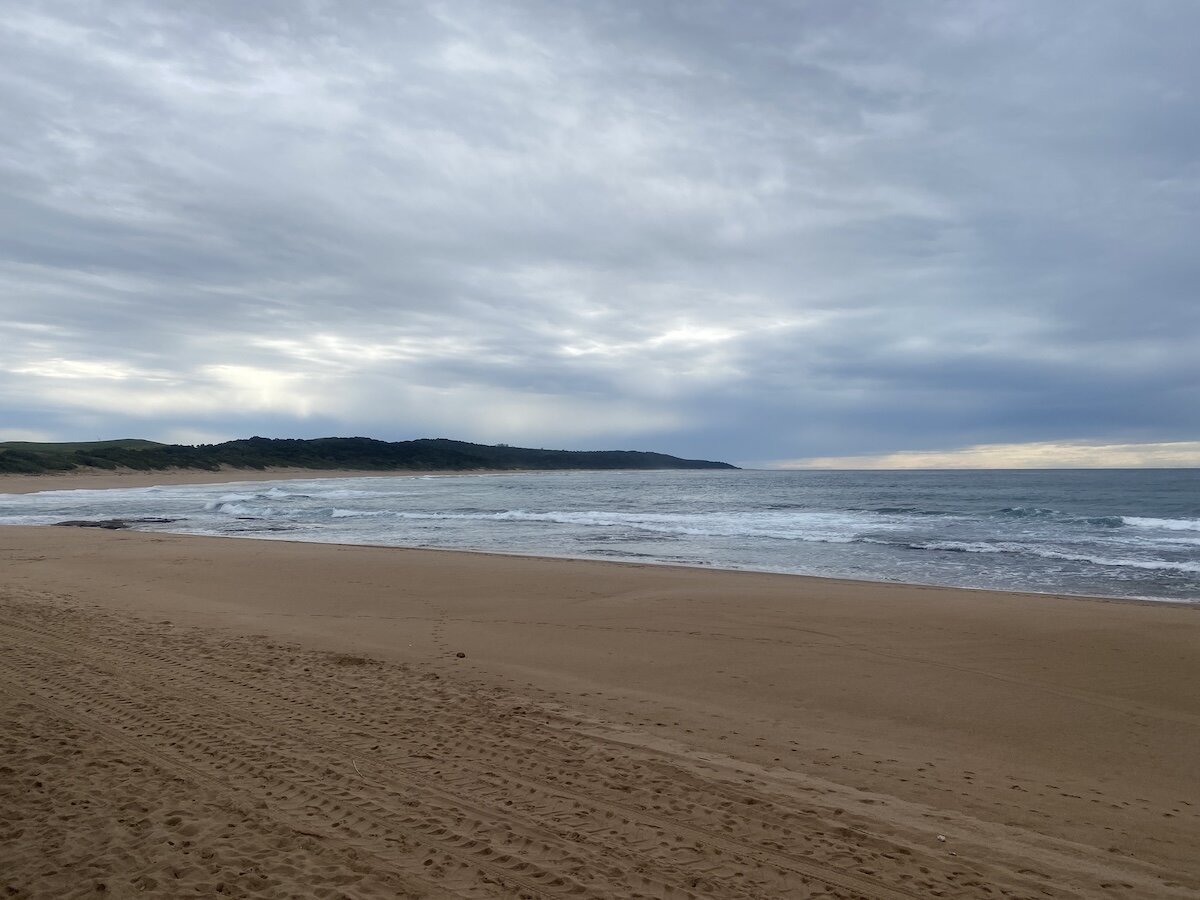
Winter at Zinkwazi does not match what most South Africans mean by winter. Dry. Mild. Mostly sunny. June and July average 35mm of rain each, across three or four rainy days a month. Daytime temperatures hold in the low-to-mid-20s. Humidity settles around 63 per cent in July per long-term Stanger weather averages. Evenings are cool enough for a fire and closed shoes, which by subtropical standards is an event in itself.
The ocean drops to its coolest but stays above 20°C. Most Joburg and Cape Town visitors look at 21°C, think about where they have swum before, and get in. The Dolphin Coast winter is mild by any national standard.
The one qualifier is the cold front. Two or three times a winter, a front pushing up from the Cape reaches the KZN coast. It brings two or three days of overcast sky, southerly wind, light showers, and temperatures five to eight degrees under average. Then it moves through and the clear sky comes back. If you arrive in the middle of one, the ocean is still warm and the lagoon is still calm, but the beach day becomes a reading day.
June and July also put the humpback whale migration offshore. You can see them from the beach without a boat. Most visitors do not expect this, and it is one of the things that converts them into regulars.
What to pack for winter: A warm layer or fleece for evenings, closed shoes for after dark. Daytime clothing is still light. Bring a jacket, you will use it at night though it may stay in your bag during the day.
Spring weather (September and October)
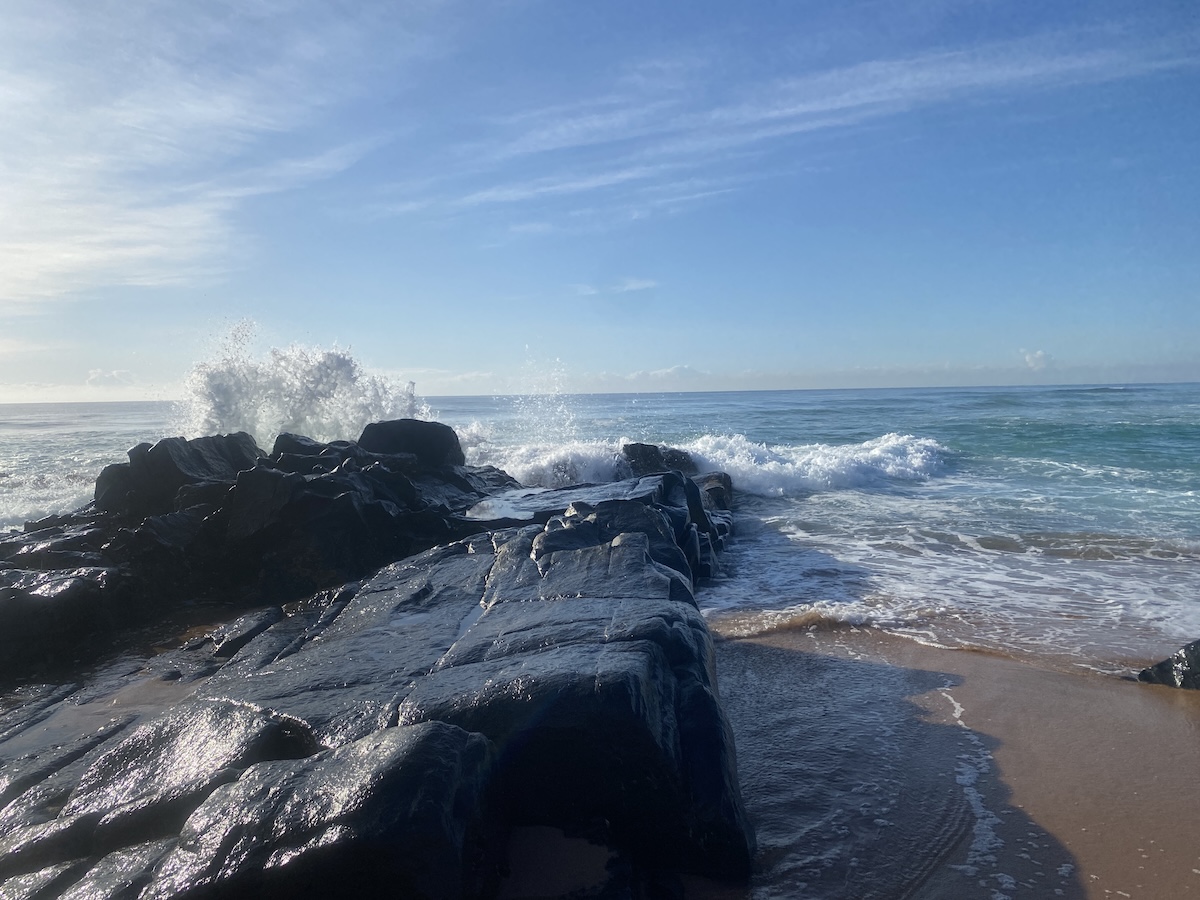
Spring is the summer dress rehearsal. September stays mild (mid-20s, low humidity, 65mm of rain). October pushes warmer, rain climbs to 85mm, the UV is back to high-to-very-high, and the north-easterly sea breeze starts kicking in by late morning and blowing onshore until evening. By November the humidity is creeping back and you are sleeping with the fan on again.
October has a reputation on this coast. Good weather, quiet beaches, rates still well under peak. The people who want the summer experience without the summer crowd know to come in October.
What to pack for spring: Light summer clothes. Sunscreen. From mid-October on, add the insect repellent back in. The lagoon is warming, the bugs know.
How does wind affect Zinkwazi Beach conditions?
The wind decides more beach days at Zinkwazi than the temperature does. The North Coast has two dominant regimes and they feel completely different. Knowing which is blowing on a given day matters more than the forecast air temperature.
The north-easterly is the summer sea breeze. Quiet in the morning, building from ten or eleven, peak between two and five, easing after sunset. On a strong day it pushes onshore at the main beach, chops up the surf, and turns the afternoon hot and hazy. The lagoon does not feel it. This is why summer mornings at the beach are usually better than summer afternoons.
The south-westerly is the winter wind. It arrives behind cold fronts and blows for a day or two after they pass. Offshore at the main beach, which does two things: cleans the water, and holds up wave faces for cleanly breaking surf. This is the wind surfers wait for. When it blows right, Zinkwazi delivers its best waves of the year.
Then there is the berg wind. A few times each winter a hot dry westerly blows offshore from the interior. Temperatures jump 8 to 10 degrees above average, the humidity drops under 40 per cent, and the beach gets what feels like a stolen summer day in July. These last 24 to 48 hours. The regulars watch for them.
What is the best weather for each activity at Zinkwazi Beach?
Weather good for one activity is weather bad for another. The wind that flattens the surf makes the fishing frustrating. The humidity that keeps the ocean warm ruins the forest walk. Here is what each activity actually wants.
Lagoon swimming: Any month, which is one of the things that makes Zinkwazi what it is. Warmest November to April at 26 to 28°C. Winter lagoon swims work if the sun is out.
Ocean swimming: October to May if you want water warm enough to forget about. June to August is swimmable but you notice. The calmest ocean surface of the day is usually before 10am, before the north-easterly gets going.
Surfing: May to August, hands down. Cold fronts pass, south-westerlies blow offshore, the sea cleans up, and the waves get shape. Summer surf is wind-affected and short. Dawn patrol is still worth it before the breeze comes on. Zinkwazi surfing covers the breaks in detail.
Whale watching from shore: June to November, peaking July to September. Calm clear mornings with low wind are when you see them. Bring binoculars.
Fishing: All year. Winter seas are calmer, water is cleaner, many anglers prefer it. Shad (elf) run June to September along this coast. Summer delivers but you fight the wind for it.
Birdwatching: September to December is the best window for migrants through the milkwood forest and lagoon. The fish eagle pair at the lagoon is resident year-round and loud at dawn. Forest birding is better in the cooler morning hours from April through September.
Forest and trail walks: April to September. Summer walks are for before nine in the morning only. After that, the humidity turns them into a chore.
Beach days with young children: May, June and September. Mild warmth, low-to-moderate UV, no thunderstorms, and the lagoon is warm and safe. Zinkwazi Beach family holiday covers the practical side in detail.
How can I check live Zinkwazi weather and sea conditions?
This guide is about patterns. Actual conditions on actual days are a different question, and monthly averages will not answer it.
For specialist forecasts:
Surf detail for the Dolphin Coast breaks: Surf-forecast.com.
Severe weather warnings: The South African Weather Service issues the official alerts. Worth checking ahead of trips between November and April.
If you are planning the trip, start with verified self-catering at Zinkwazi Beach.
Frequently asked questions
Published July 28, 2026