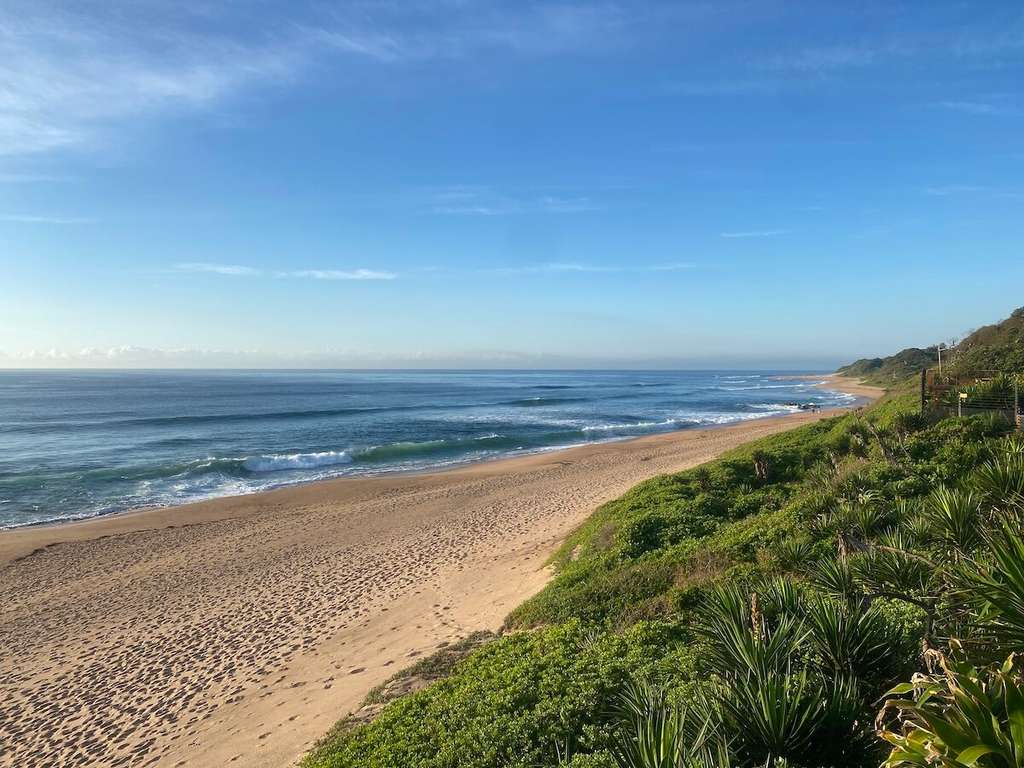
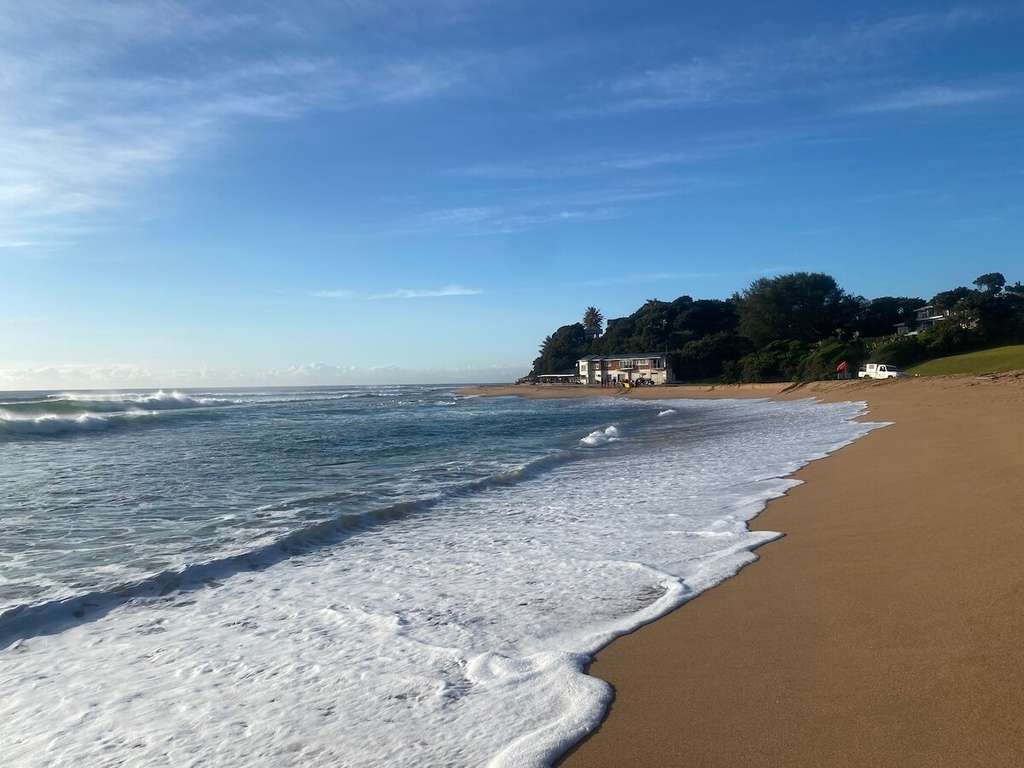
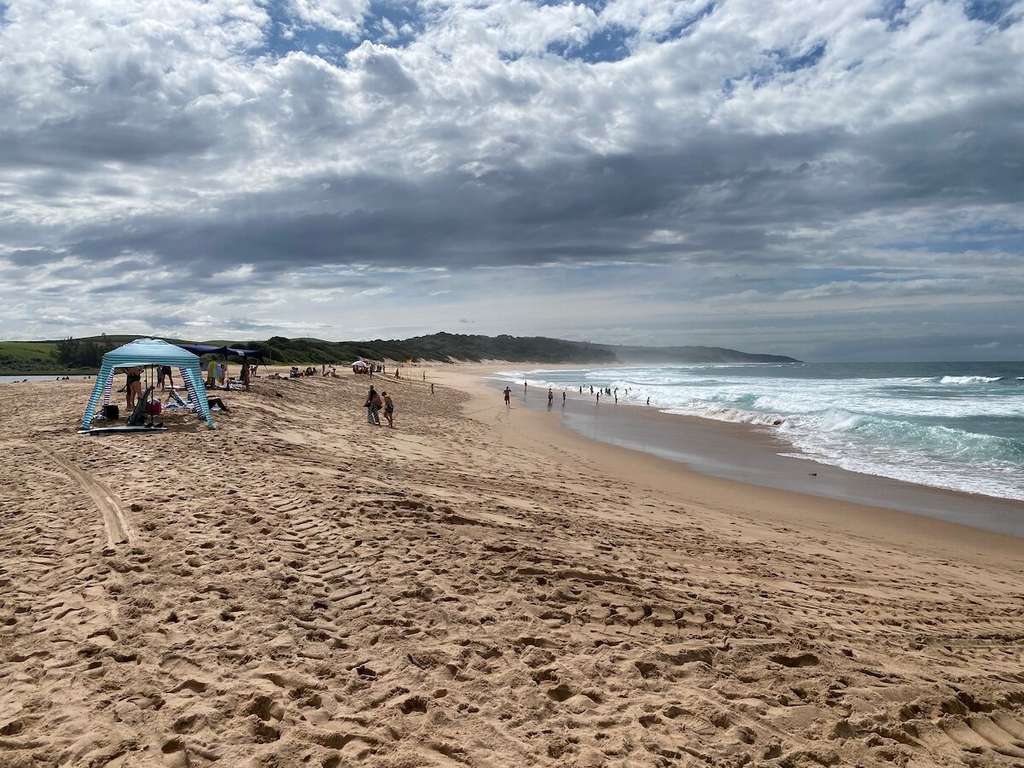
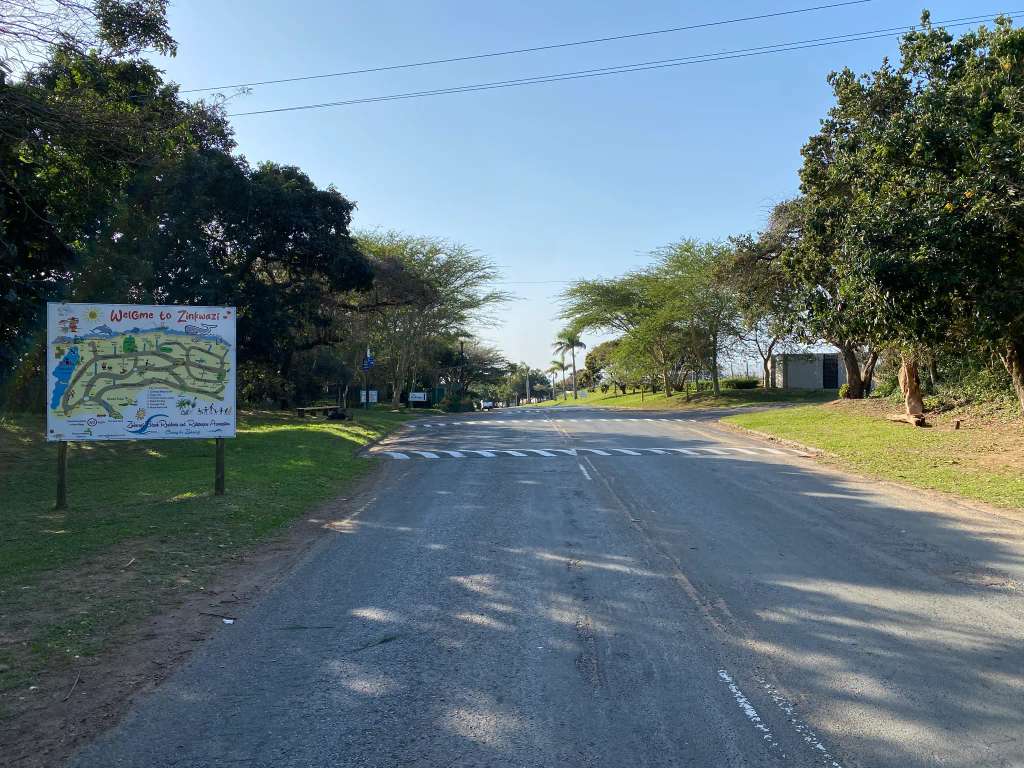
Most visitors think of the tide as a number on a chart. At Zinkwazi it is a schedule. Low tide is when the rock formations appear along the beach edge. Incoming tide is when the shore anglers start catching. The lagoon mouth, the rip currents, the kayak window. All of them shift on a six-hour clock that most people never check. A few minutes with the tide table before each day changes how you use the beach entirely.
What does a Zinkwazi tide day actually look like?
Zinkwazi sits on the same tidal regime as the rest of the South African east coast: semidiurnal, two highs and two lows in roughly every twenty-five hours. The reference station is Durban, and Zinkwazi tides run about 5 to 10 minutes earlier. Tide heights at Durban range from a maximum of about 2.5m at high spring to slightly below 0m at the lowest spring lows, per long-term harmonic data. Most days you will see a tidal range of 1.5 to 2 metres between consecutive high and low water.
The two-week cycle matters more than most visitors realise. Around the full moon and the new moon, the sun and the moon pull in alignment and you get spring tides. Biggest range, lowest lows, highest highs. The rock formations are at their most exposed. Shore fishing is at its best. The lagoon mouth current, when there is one, runs at its strongest. A week later, around the first and last quarter moon, the pull goes off-axis and you get neap tides. Gentler range, smaller difference between high and low. Calmer in the lagoon. Less productive at the rocks. Easier on a paddleboard.
If you want to fish, explore the rocks, or watch the lagoon mouth run, look for spring tides and a moon near full or new. If you have small children and want a calmer water day, neaps are kinder.
Where do I find Zinkwazi tide times?
The on-site resource for live tides is updated regularly with the day's high and low water times alongside swell and wind direction. It is the one to bookmark before a beach day or a fishing session.
For predicted tide tables further out:
Detailed tables: The South African Navy Hydrographic Office publishes the official tide predictions for South African coastal stations. Use Durban as your reference and add 5 to 10 minutes for Zinkwazi.
Tides plus wind plus swell in one view: Windguru overlays tide times with wind and swell forecasts. Useful for planning a fishing session and a surf check at the same time.
Tide plus solunar plus moon phase: tides4fishing shows the spring-neap cycle visually with daily fishing activity ratings.
Rip currents and swimming safety
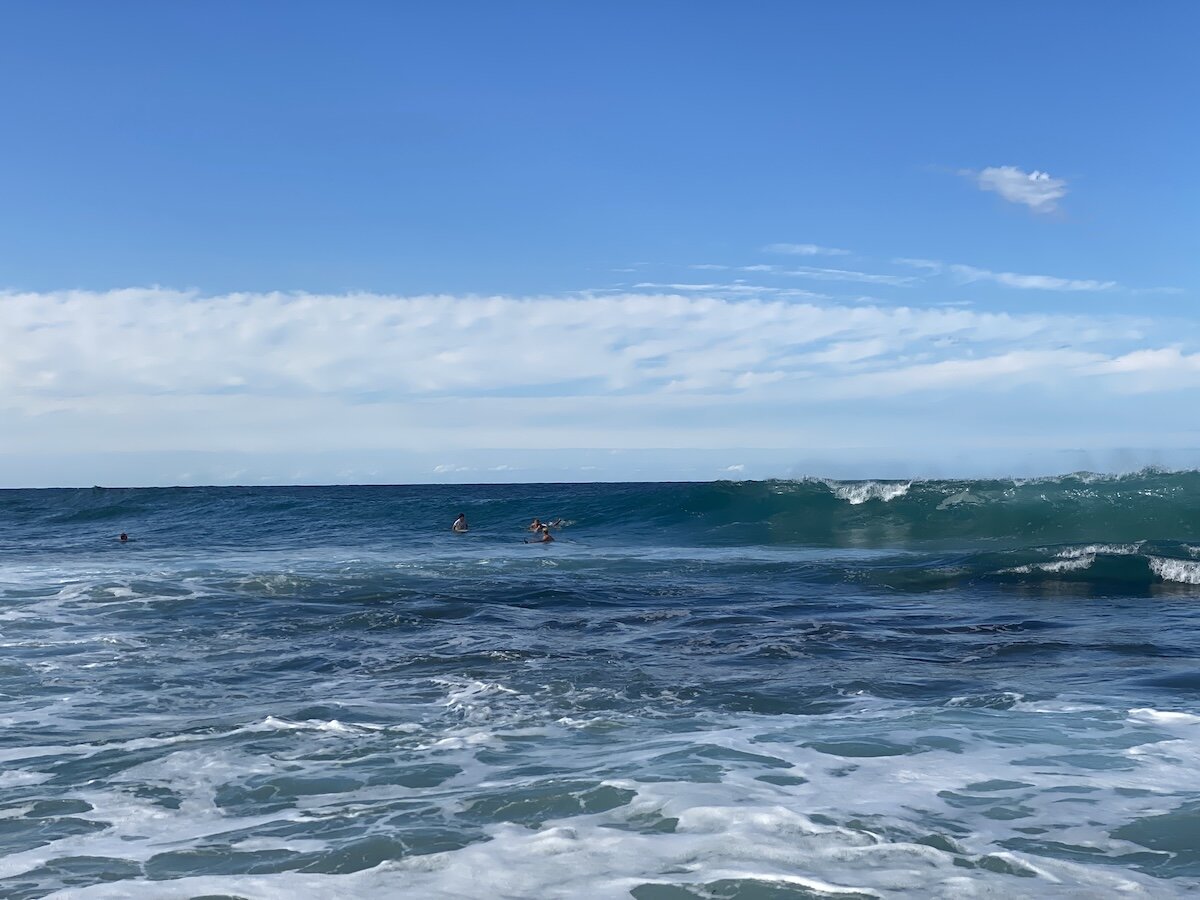
Rip currents are the most serious ocean hazard at Zinkwazi's main beach. The North Coast from Umdloti to Zinkwazi is rip country in the right swell, and the NSRI confirms rip currents are the biggest danger visitors face in South African waters.
A rip forms when water draining off the beach finds a gap in the breaking waves and channels back out as a fast-moving river. The bigger the swell, the stronger the rip. Winter, with its bigger southerly swells, produces more pronounced rips than summer does even though summer has more people in the water.
If you find yourself in a rip, the rules are simple and counter-intuitive:
Do not swim against it toward the beach. You will lose. Rips can run faster than two metres per second, quicker than any swimmer.
Swim parallel to the shore to exit the channel. Rips are usually narrower than they are long.
If you are tired, float. Conserve energy and signal for help. The rip will lose its pull a short way past where the waves break.
Spot one before you swim: a channel of choppy or differently-coloured water cutting through the line of breaking waves. Sand or seaweed moving outward.
Swim between the lifeguard flags at the main beach during peak season and weekends. Lifeguards know which sections are running clean and which are running a rip on a given day. Jamie's Beach and Black Rock Park have limited or no lifeguard coverage. Strong swimmers only. The lagoon is the safer water for children and less confident swimmers, year-round.
How tides affect the lagoon
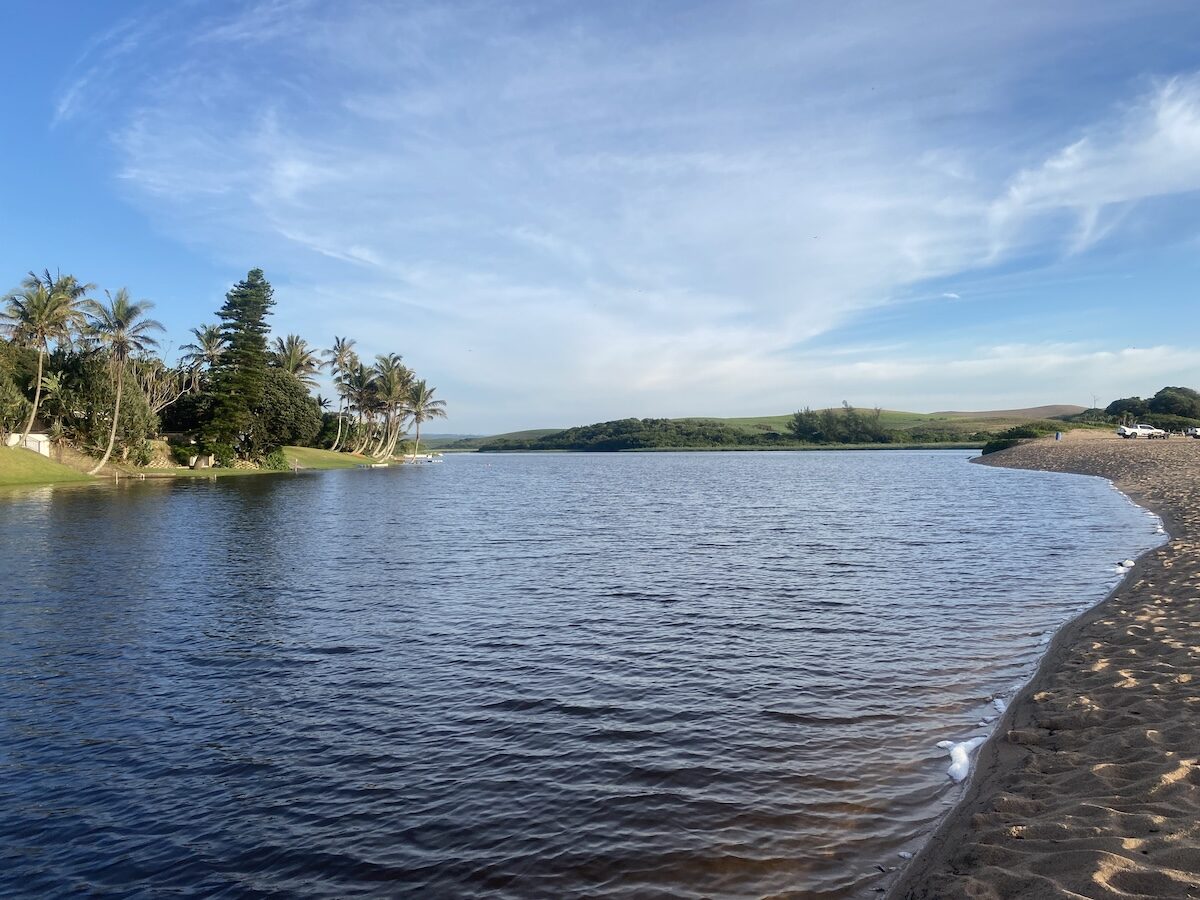
The Zinkwazi Lagoon is a tidal estuary, and its character shifts hour by hour with the cycle. At high tide the lagoon is deepest, the mouth is wide, the bank is at its furthest reach, and the kayaking is at its calmest. At low tide the water level drops and the sandbar at the mouth becomes more exposed.
The condition that catches most visitors by surprise is the post-rain outflow. When the lagoon has taken heavy summer rain and is close to overflowing, the outgoing tide produces a noticeable current at the mouth. A shallow, fast-moving stream of fresh water cutting across the sandbar into the sea. This is the boogie-board run.
Children walking up through the stream toward the main beach and riding the current back is the local summer afternoon scene. Take care if it is running strongly. The flow can be quicker than it looks.
For more on how the lagoon's character shifts with rain and tide, the lagoon-specific write-up covers the full picture.
Low tide: rock formations and exploring
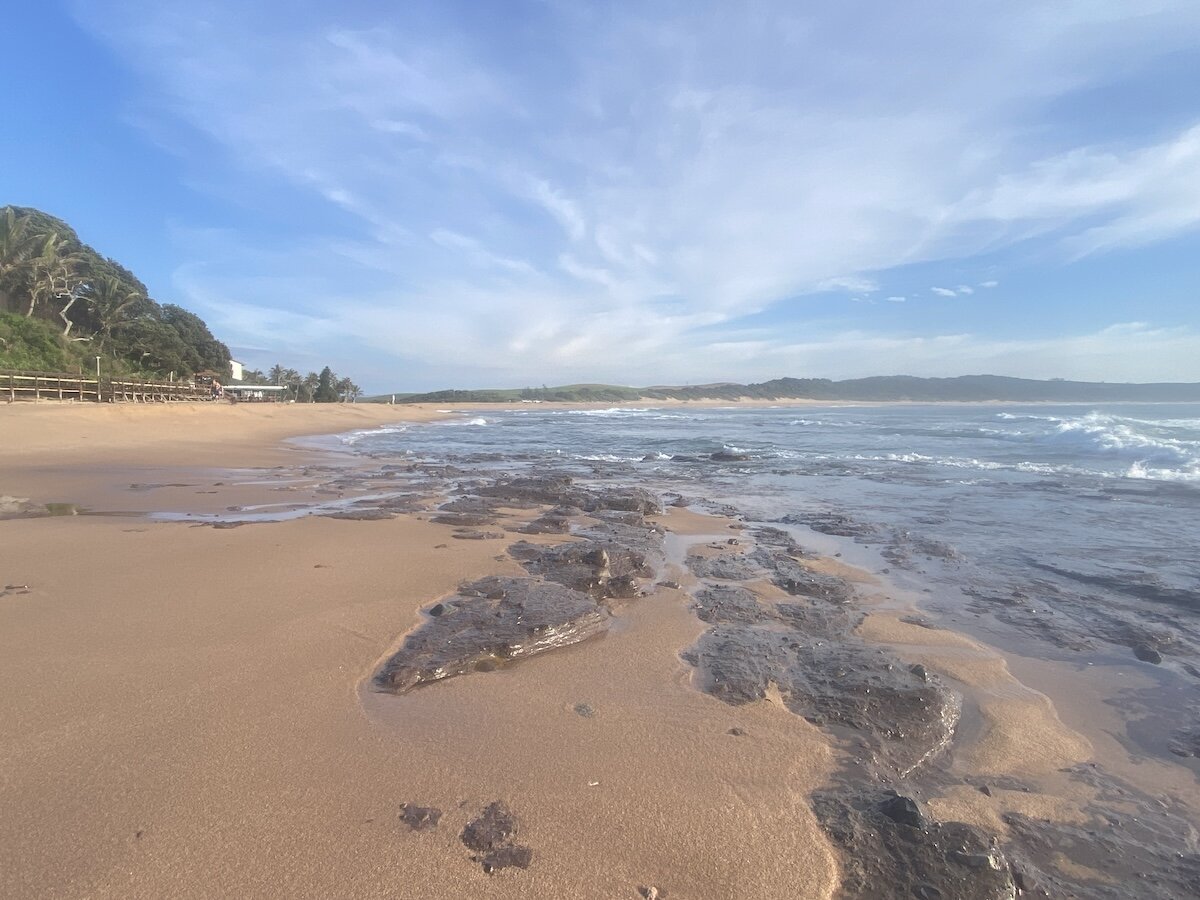
When the tide drops fully at Zinkwazi, the natural rock formations along the beach edge near the main beach come out. These are not formal tidal pools. They are rocky outcrops that hold seawater in their hollows and bring out the marine life that lives in them: small crabs, periwinkles, sea anemones, the occasional brittle star. Children with curious eyes can spend an hour at a low spring tide and not run out of things to find.
The formations are for exploring, not for swimming. They sit on the wave-line and the swell can come over them quickly when the tide turns. All swimming happens at the main beach under the lifeguard flags, or in the lagoon.
Fishing windows
Tidal timing is the single most consistent variable in shore fishing productivity at Zinkwazi. The best windows are the two hours either side of the tidal change. The two hours before low tide and the two hours into the incoming. Early morning on an incoming tide consistently outperforms midday on a falling tide. Spring tides outproduce neaps. A spring incoming at first light is the prime window every angler on the beach knows about.
For boat anglers, the incoming tide pushes bait fish inshore and activates the nearshore reefs. The Mvoti River outflow and the clean oceanic water create colour lines offshore where pelagic species concentrate. Boats that push slightly further out when inshore conditions are green find better fishing on couta and snoek.
Shad (elf) season: read this before you cast
The shad run is the centrepiece of the KZN winter beach calendar, and it comes with rules that have actual consequences. The Department of Forestry, Fisheries and the Environment confirmed in 2025 that the closed season for shad runs from 1 October to 30 November each year, no fishing permitted.
Outside the closed season, the bag limit is four fish per angler per day, with a minimum size of 300mm total length. Shad is no-sale in KZN under any circumstances. The conservation officers patrol the beach and the fines are stiff. Know the rules before you walk down with a rod.
For the species breakdown, the working spots, and what gets caught when, the species and spots that actually produce covers it in full.
Kayaking and paddleboarding windows
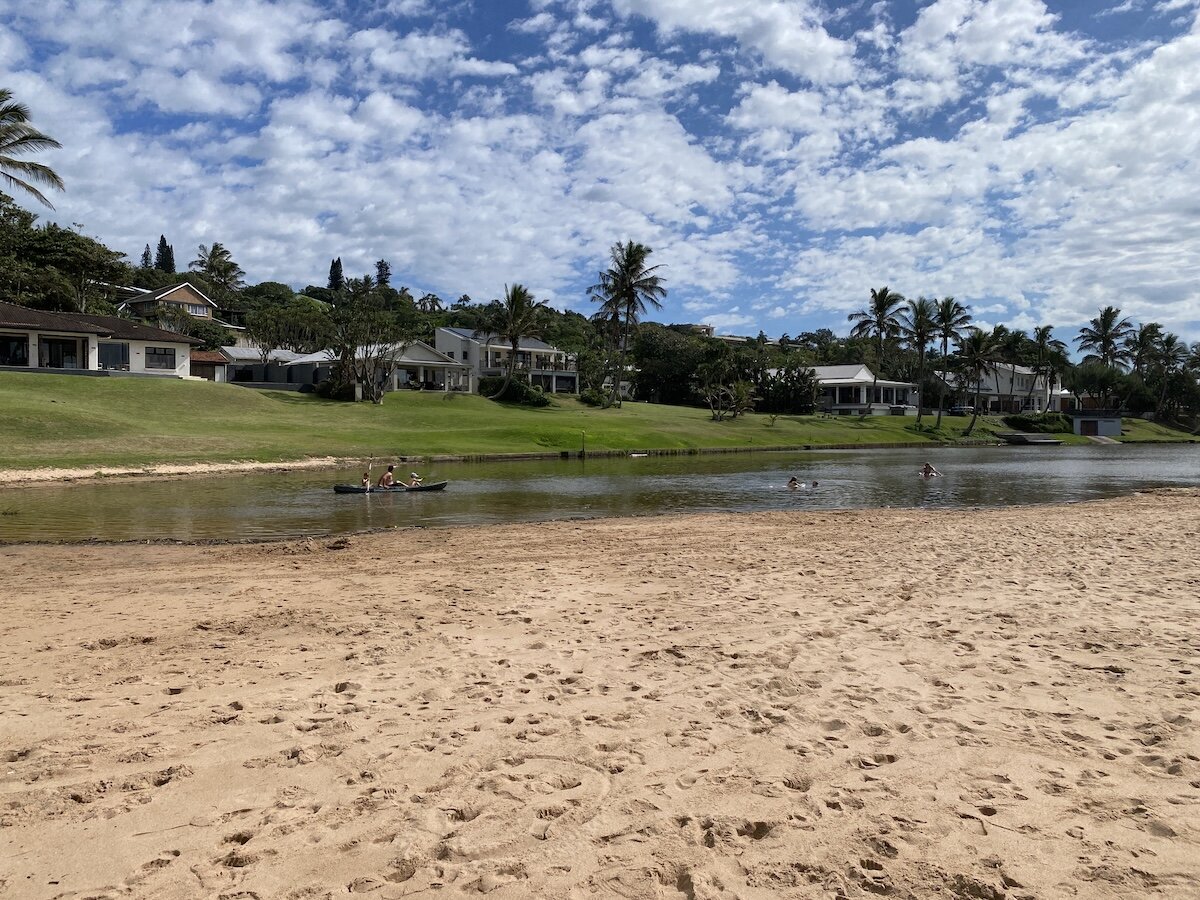
The best conditions for kayaking on the lagoon are the first two hours after sunrise on a calm morning. The surface is glass. The light is sideways and the water is readable. The current at the mouth is minimal on a mid-tide. Pick a high or rising tide if you want to push up into the upper reaches. There is more water under the boat and the snags are covered.
One real warning: avoid the lagoon mouth at low tide on a strong outgoing current if you are returning from upstream. Paddling against an outflow on a sandbar takes more effort than most casual paddlers expect, and the run-out into the sea is not where you want to misjudge it.
If you are starting to plan, Zinkwazi has many self-catering options including lagoon-side cottages, beach houses, pet-friendly places, and the houses set back in the milkwood forest.
Frequently asked questions
Published August 4, 2026