The Zinkwazi Lagoon has many moods. Most visitors see only one of them.
They arrive, they find the lagoon calm and still, they spend a morning in the shallows, and they leave thinking they understand it. But the lagoon is a tidal estuary connected to the Indian Ocean at its mouth. It breathes with the sea. After heavy rain it swells and overflows, the sandbar between lagoon and ocean disappearing under a sheet of moving water, the whole shoreline rearranging itself overnight. On those mornings the lagoon looks nothing like the postcard. It looks like something altogether wilder and more interesting. Then the tide falls, the sandbar reappears, the calm returns. Visitors who were not there the day before wonder why everyone who was keeps talking about it.
This is what the lagoon actually is: not a backdrop, not a feature, but the thing that organises everything at Zinkwazi. The daily rhythm of the village moves around it.
What the Zinkwazi Lagoon actually is
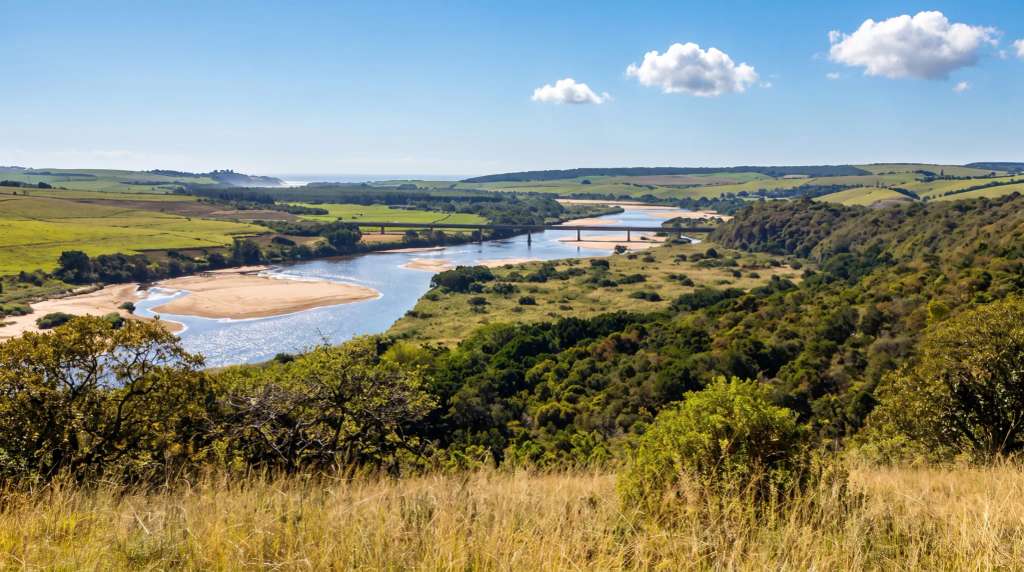
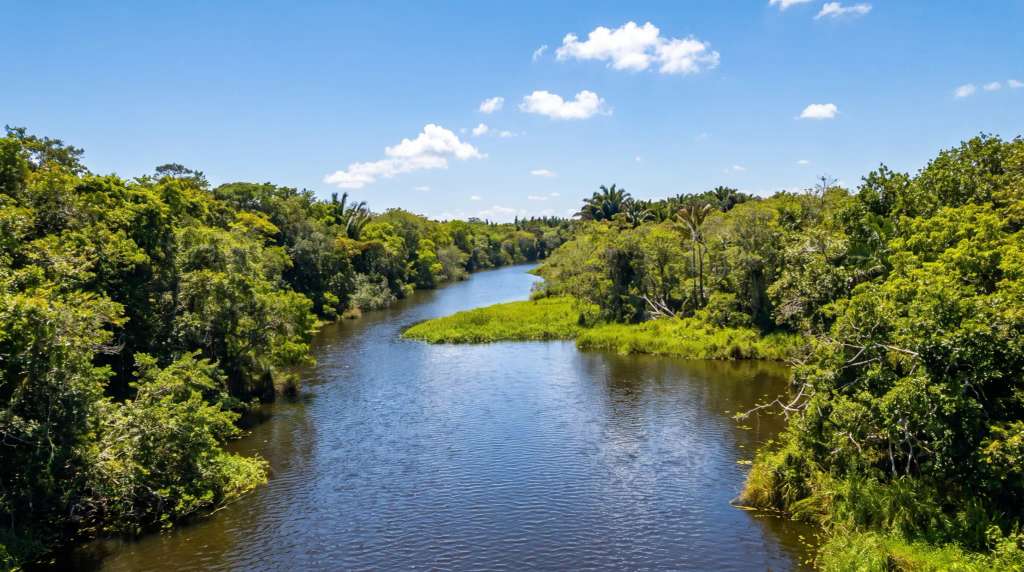
The lagoon runs approximately eight kilometres inland from its mouth at the main beach, where it meets the Indian Ocean on a narrow sandbar. It is warm, shallow, and sandy-bottomed for most of its length. The water temperature sits a few degrees above the open ocean. On most days the surface is so still you can see the bottom clearly from a kayak at the upper reaches.
It is classified as a Temporarily Closed Estuary, the dominant estuary type along the KwaZulu-Natal coast. This is the technical name for the dynamic the lagoon performs every season: the mouth opens during high-flow periods and closes again during low-flow periods, with the sandbar between lagoon and ocean disappearing and reappearing across the year. The pattern is not chaos, it is the system. South Africa's National Biodiversity Assessment (SANBI) classifies and monitors the country's estuaries as among the most ecologically significant habitat types on the coast, providing nursery habitat for marine fish species, feeding grounds for shore birds, and a buffer between the upland forest and the open sea.
The milkwood forest that lines the western bank of the lagoon is part of the same system. It is not decorative vegetation. It is one of the last intact stands of coastal dune forest on the KwaZulu-Natal North Coast, and it is why the lagoon edge looks the way it does and supports the birdlife it does. The forest produces species that do not venture out to the open beach: forest specials, kingfishers working the lagoon backwaters, and the African Fish Eagle that gives the village its name.
The lagoon also functions as a fish nursery. Mullet, grunter, juvenile kob and other estuarine species are present in the shallows, supporting recreational shore fishing on the lagoon banks. Fishing at Zinkwazi Beach covers the full picture across lagoon, shore and offshore.
Swimming in the lagoon
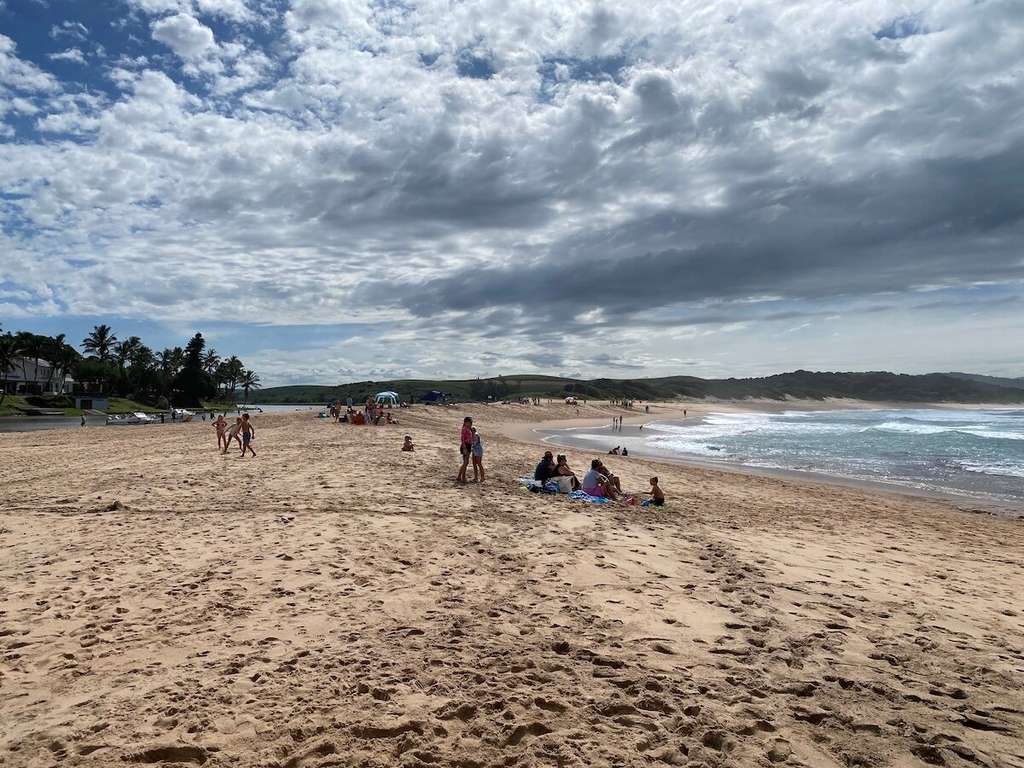
Stand at the lagoon mouth on a calm morning and you will see something that first-time visitors consistently stop to look at: the lagoon to one side, completely still, and the ocean to the other, moving and alive, separated by a strip of sand narrow enough to cross in a few steps. The contrast between them is the thing that most surprises people who arrive without expecting it.
The lagoon is where most families at Zinkwazi spend the majority of their time. It is warm, with no currents on most days, and shallow enough that young children wade comfortably for long stretches. Parents must supervise directly. Lifeguards are on duty at the main ocean beach to the north, not in the lagoon itself.
When the lagoon mouth is flowing strongly into the sea on an outgoing tide, the narrow stream that forms across the sandbar becomes its own attraction. Children ride the current on boogie boards, walking back through the shallows and going again. It is one of those simple, specific pleasures that people who grew up coming to Zinkwazi remember for years. Take care if the flow is running strongly.
For a full breakdown of swimming conditions at both the lagoon and the ocean beach, swimming safety at Zinkwazi Beach covers each access point in detail.
"On most mornings the lagoon surface is so still it reflects the milkwood canopy on the far bank. By afternoon the light changes and so does everything else."
Kayaking and paddleboarding on the lagoon
The full length of the lagoon from the mouth to the far upper reaches is approximately eight kilometres. Paddled at an easy pace, the return trip takes around two hours. The lower lagoon is open and wide. As you move inland the channel narrows, the forest closes in on the western bank, and the birdlife changes: quieter species, more sheltered habitat, the occasional kingfisher working the bank ahead of you.
Morning is the best time to be on the water. The surface is flat, the light is low and warm from the east, and the lagoon has not yet filled with activity.
There is no formal kayak or paddleboard rental at Zinkwazi. Some self-catering properties have equipment available. Worth confirming with your host before booking if this matters to you. Otherwise, bring your own. Access to the lagoon from the main beach is free.
The lagoon and the ocean: understanding both
The lagoon and the main beach are not interchangeable. They are different bodies of water that suit different activities and different conditions.
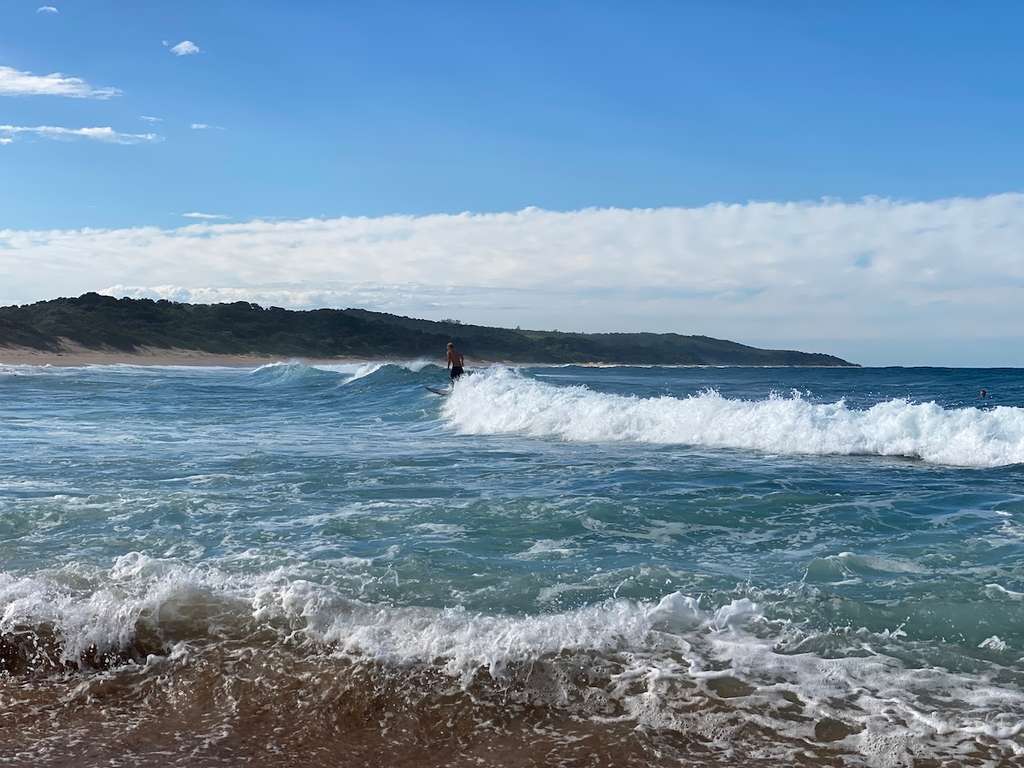
The lagoon is the calm option: warm, shallow, protected from swell, and reliable year-round. The ocean beach has surf, lifeguard coverage between the flags, and the unpredictability of open water. Confident swimmers and surfers use the ocean beach. Families with young children, kayakers, and anyone who wants to be on flat water use the lagoon.
The point where the two meet is the sandbar at the lagoon mouth, the most photographed spot at Zinkwazi, and for good reason. It is one of the few places on this coast where you can watch the Indian Ocean and a calm lagoon coexist within metres of each other. When the lagoon overflows after heavy rain and the two bodies of water merge, the sandbar disappears entirely, the terrain changes, and the whole feeling of the place shifts with it.
That is the Zinkwazi Lagoon. Not a swimming pool. Not a pond. Something with its own logic, its own timing, and its own reasons for looking different every day you come back to it.
If you are starting to plan, Zinkwazi has many self-catering options including lagoon-side cottages, beach houses, pet-friendly places, and the houses set back in the milkwood forest. Lagoon-side properties give you first light access to the water and the shortest walk to the calm side of the village.
Frequently asked questions
Published August 18, 2026