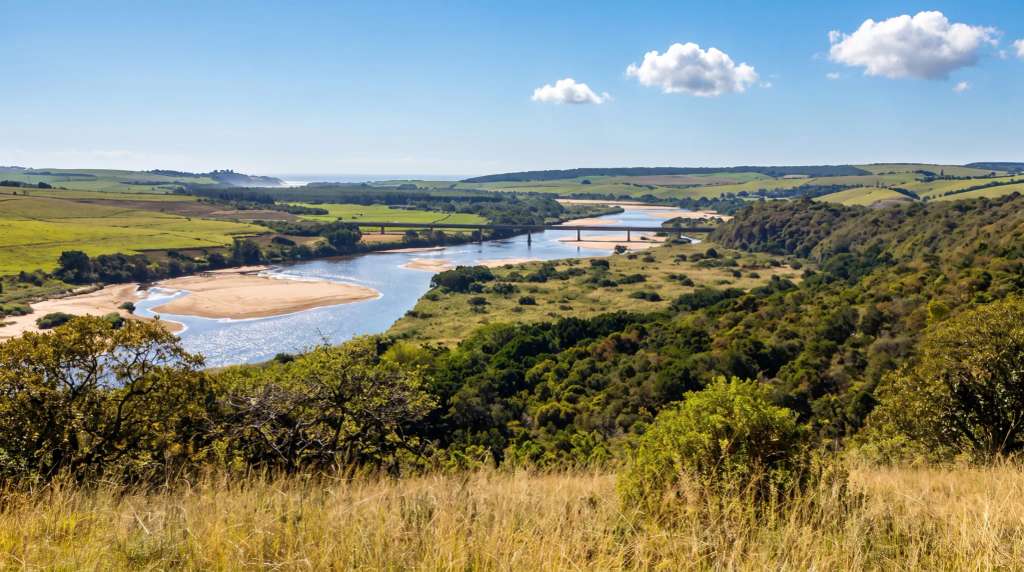
You hear Zinkwazi before you see it. The African Fish Eagle calls across the lagoon before sunrise. That sound, once you have heard it echoing through milkwood forest at dawn, is the one that brings birders back. But the fish eagle is not the reason serious listers make a point of getting here. The reason is a breeding pair of Crowned Eagles holding territory in the iLala palm forest to the south of the village. One of Africa's most powerful raptors, Near Threatened globally, Vulnerable in South Africa. Nesting within walking distance of a coastal village beach car park.
More than 250 bird species have been recorded in the Zinkwazi conservancy. Three distinct habitats sit within a few kilometres of each other: the lagoon edge, the coastal dune and iLala forest, and the open beach. Each produces different species at different times of day. A full morning here, lagoon at first light, forest by 7am, beach by mid-morning, is a productive birding session by any measure. For a village with no birding infrastructure, no hides, no organised walks, and no entrance fee, it punches well above its weight.
Why Zinkwazi is good for birding
The answer is habitat diversity within a very small area.
The lagoon edge, the coastal dune forest and iLala palm forest, and the open beach each draw different species at different times of day. A birder who arrives at the lagoon before sunrise, moves to the forest trails by mid-morning, and scans the beach in the late afternoon can reasonably expect to encounter species from all three zones in a single day without travelling more than a few kilometres.
The name of the village itself points to the reason people have long recognised this place as significant for birds. Zinkwazi is a Zulu word for the African Fish Eagle. The fish eagle is the sound of Zinkwazi: the call that carries across the lagoon before 7am on most mornings, heard from properties throughout the village when conditions are quiet. It is the bird people remember longest after a stay here.
The village also sits on the Zululand Birding Route, a network of significant birding destinations running along the KwaZulu-Natal North Coast and into Zululand. Zinkwazi's position on the route reflects its ecological standing: it is not incidental birding territory, it is designated habitat.
Local knowledge: Klaus Achtzehn's spotter's guide
Klaus Achtzehn, one of the hosts at Zinkwazi Lagoon Lodge, has compiled a spotter's guide to the birds of the Zinkwazi area. The guide covers the more than 250 species recorded in the conservancy and points birders toward the specials and endemics found here. For visitors serious about working the iLala forest or the lagoon-edge habitat with intent rather than chance, Klaus's guide is the local reference point. The lodge can be contacted directly for visitors wanting to access it.
The Crowned Eagle of the iLala forest
A resident breeding pair of Crowned Eagles has been confirmed in the iLala palm forest area at Zinkwazi. This is the detail that separates Zinkwazi from most coastal birding destinations on this coast.
According to BirdLife South Africa, the Crowned Eagle is classified as Near Threatened globally and Vulnerable in South Africa. It is Africa's most powerful bird of prey, capable of taking prey significantly heavier than itself. Breeding pairs maintain territory for up to a decade, and the breeding cycle is typically biennial: egg-laying in the dry season, with chicks fledging into the rainy season. The iLala palm forest (Hyphaene coriacea, the lala palm) is a distinct coastal habitat type and one of this species' preferred breeding environments in KwaZulu-Natal, which is the species' regional stronghold in South Africa.
A sighting is not guaranteed. Crowned Eagles are not conspicuous birds and the breeding pair at Zinkwazi occupies a defined territory in the iLala forest area to the south of the village. For birders who are serious about the species, knowing which section of the trails to focus on matters. Klaus's spotter's guide and a quiet conversation with the lodge are the right starting points.
Lagoon and beach species to look for
The lagoon edge and beach habitat at Zinkwazi produces consistent sightings of the following species across the year:
| Species | Habitat | Best time | Notes |
|---|---|---|---|
| African Fish Eagle | Lagoon, forest edge | Before 7am | The defining bird of Zinkwazi. Calls most mornings |
| African Spoonbill | Lagoon edge, mudflats | Low tide | Wades exposed areas at low water |
| Malachite Kingfisher | Lagoon bank | Early morning | Small and fast along the waterline |
| Giant Kingfisher | Lagoon, river | Dawn | Often heard before seen |
| Pied Kingfisher | Open lagoon | Morning | Hovers before diving, distinctive |
| Grey Heron | Lagoon edge | Any time | Commonly seen standing still in shallows |
| Goliath Heron | Lagoon edge | Early morning | Largest heron in Africa |
| African Sacred Ibis | Lagoon, beach | Any time | Often in small flocks on exposed flats |
| White-breasted Cormorant | Lagoon, ocean | Morning | Regularly perches on the sandbar |
| Kelp Gull | Beach, lagoon mouth | Any time | Year-round at the beach |
| Swift Tern | Beach, lagoon mouth | Morning | Common seabird along the shoreline |
Forest specials to look for
The coastal dune forest and iLala palm forest produce a different set of birds altogether. These are the species that bring listers to the iLala habitat:
| Species | Notes |
|---|---|
| Crowned Eagle | Breeding pair confirmed in the iLala forest, sighting not guaranteed |
| Purple-crested Turaco | The provincial bird of KwaZulu-Natal, a bright forest canopy species |
| Narina Trogon | Strikingly coloured, hard to see, a true forest special |
| Crested Guinea Fowl | Forest-floor species in coastal dune and iLala |
| African Finfoot | Quiet waterway specialist, found along sheltered lagoon backwaters |
| Wattle-eyed Flycatcher | Forest interior species, listed in Klaus's guide |
| Spotted Thrush | Coastal forest species at the southern edge of its range |
| Green Twinspot | Cryptic forest finch, requires patience |
| Goldenrumped Tinkerbarbet | Distinctive call from the canopy |
| White-eared Barbet | Common in forest edge habitat |
| Squaretail Drongo | Forest interior, often heard before seen |
| Yellow / Forest / Brownthroated Weavers | Multiple weaver species across the habitat mix |
| Scaly-throated and Lesser Honeyguides | Forest specialists, both species recorded |
| Bluemantled Flycatcher | Forest interior, often along the trails |
| Grey and Olive Sunbirds | Year-round forest residents |
Species occurrence data referenced from SABAP2 records for the Zinkwazi pentad area, and from Klaus Achtzehn's local spotter's guide.
The three habitats and when to work them
Lagoon edge and mudflats
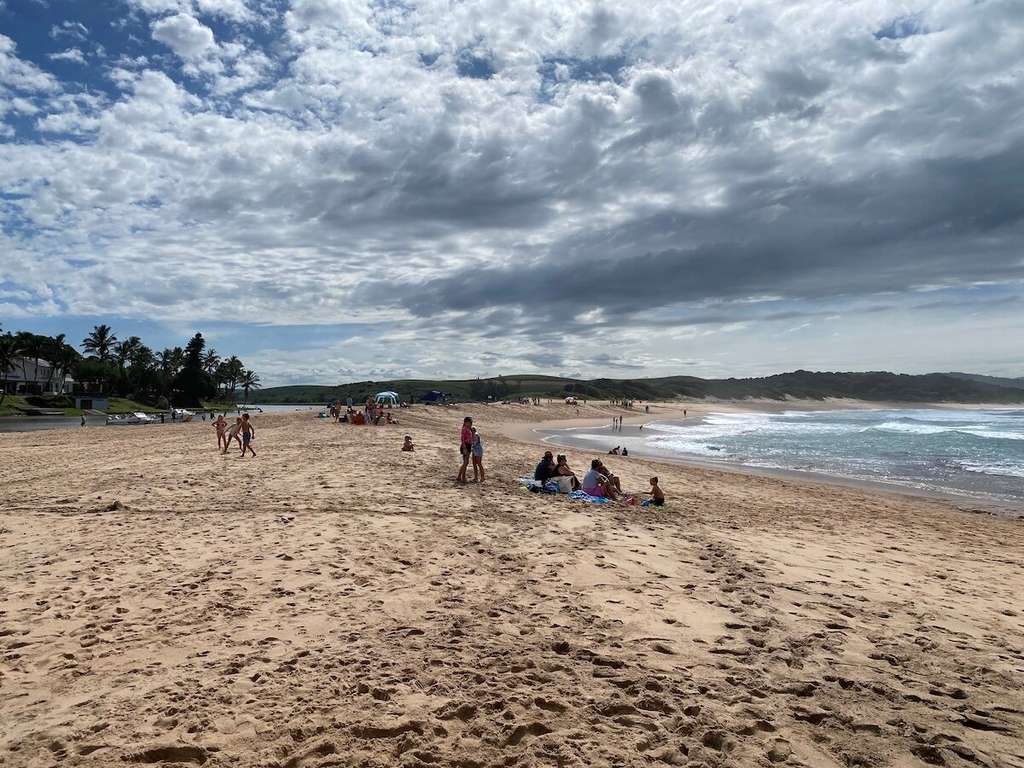
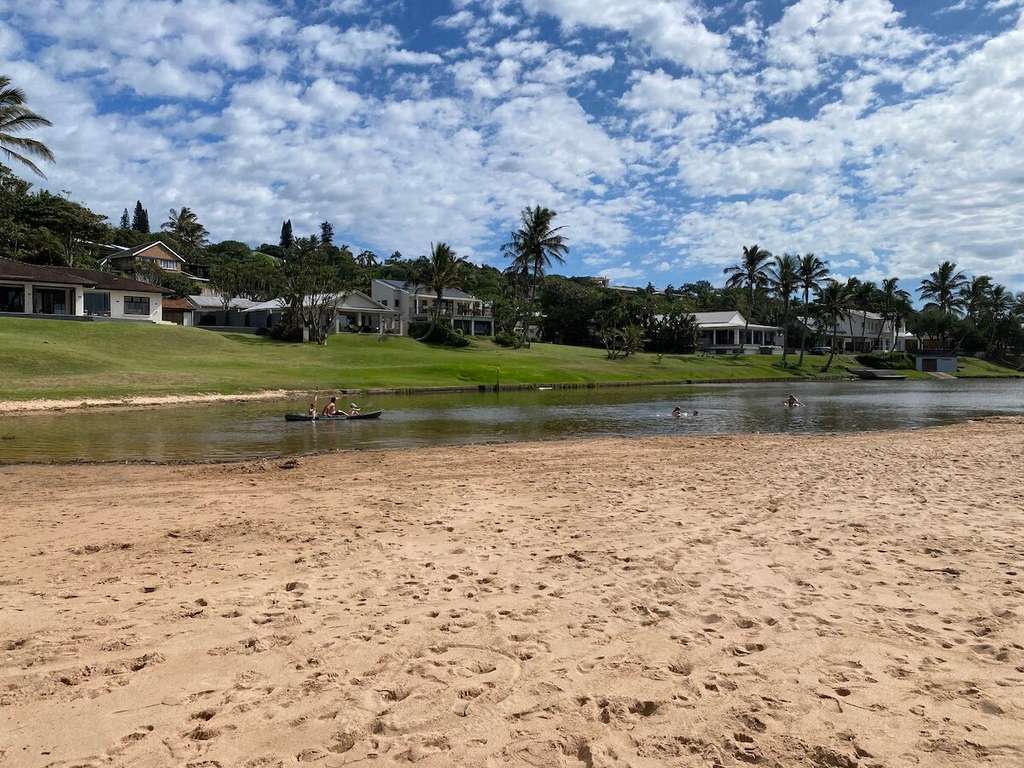
The most accessible birding at Zinkwazi and the most reliably productive at low tide. Exposed mudflats draw waders, herons, spoonbills, and kingfishers. The fish eagle is most vocal here before 7am. Access from the main beach car park. The Zinkwazi Lagoon covers the full lagoon access points.
Coastal dune forest and iLala palm forest
The forest trails run through the coastal dune and iLala habitat to the south of the village, accessed from 31 Palm Drive. This is where the Crowned Eagle breeding pair holds territory and where forest specials are found: species that do not venture to the open lagoon or beach. Best in the early morning before heat and wind pick up. Dog-friendly, with dogs on leash through the conservancy.
Open beach
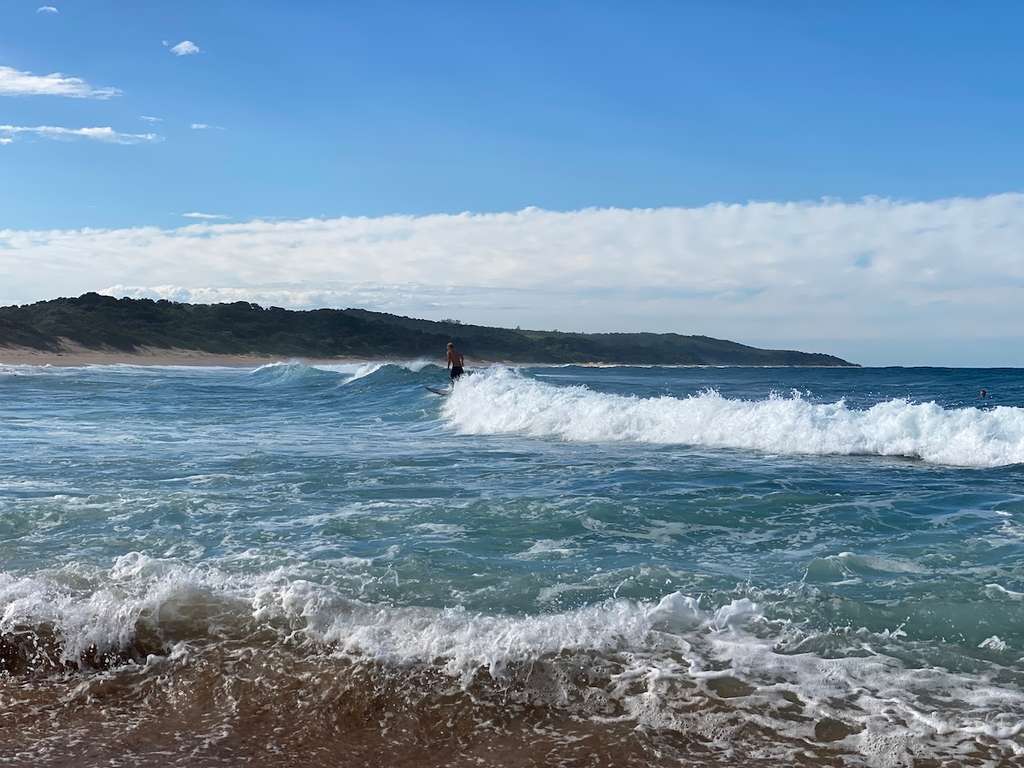
The beach at dawn produces seabirds, terns and coastal raptors that are absent from the lagoon habitat. Scan the ocean early for gannet activity, especially during June and July when the sardine run moves north and draws feeding seabirds in numbers.
Birding base: nearby hotspots
Zinkwazi is a productive base for birders extending into the surrounding region. Five reference areas are within reach:
- Harold Johnson Nature Reserve (part of the Zinkwazi Conservancy itself): subtropical woodland and moist thorn-veld habitat, covering species not found in the lagoon or iLala forest.
- Dhlokweni coastal lowland forest (~15km): pure coastal lowland forest specials, a different mix to the Zinkwazi forest trails.
- Amatikulu Nature Reserve (~30km): palm veld and dune forest, a critically endangered ecosystem (KwaZulu-Natal Coastal Belt Grassland) and a strong day trip for birders willing to drive.
- Umlalazi Nature Reserve at Mtunzini (~60km): the day trip for the Palm-nut Vulture, one of South Africa's rarest birds of prey. Three to five breeding pairs are resident, feeding on the introduced Raphia palms first planted at Mtunzini in 1915. The Raphia Palm Monument is a National Monument with a boardwalk through swamp forest into the palms. The reserve also produces Mangrove Kingfisher (winter only, end of March to early September), Spotted Ground Thrush, African Finfoot and Southern Banded Snake Eagle.
- Tugela Gorge at Kranskop (~80km): raptor specials, the longer day trip for birders chasing cliff-nesting species.
Lagoon Lodge runs cruise raft trips up the lagoon for evening birding, including the option of canoes for working the quieter backwaters where African Finfoot and skulkers are most likely. Camping at Zinkwazi Lagoon Lodge covers the lodge's full setup.
When to visit for birdwatching
Zinkwazi rewards birders in every season, but the productive windows differ.
June and July are the driest months and produce the clearest forest conditions. Visibility in the iLala and dune forest is better than in the humid summer months when dense foliage closes in. The sardine run offshore in June and July adds seabird activity on the ocean.
December to March is the summer season: hot, humid, and at its most species-rich for migrants that overwinter in KZN. Many Palearctic migrants are present along the coast during this period.
Year-round: the fish eagle, Crowned Eagle pair, kingfishers, herons, and lagoon waders are present throughout the year.
If you are starting to plan a birding trip, Zinkwazi has many self-catering options including lagoon-side cottages, beach houses, pet-friendly places, and the houses set back in the milkwood forest. The forest-set houses put you closer to the iLala habitat and the coastal dune trails.
Frequently asked questions
Published March 10, 2026