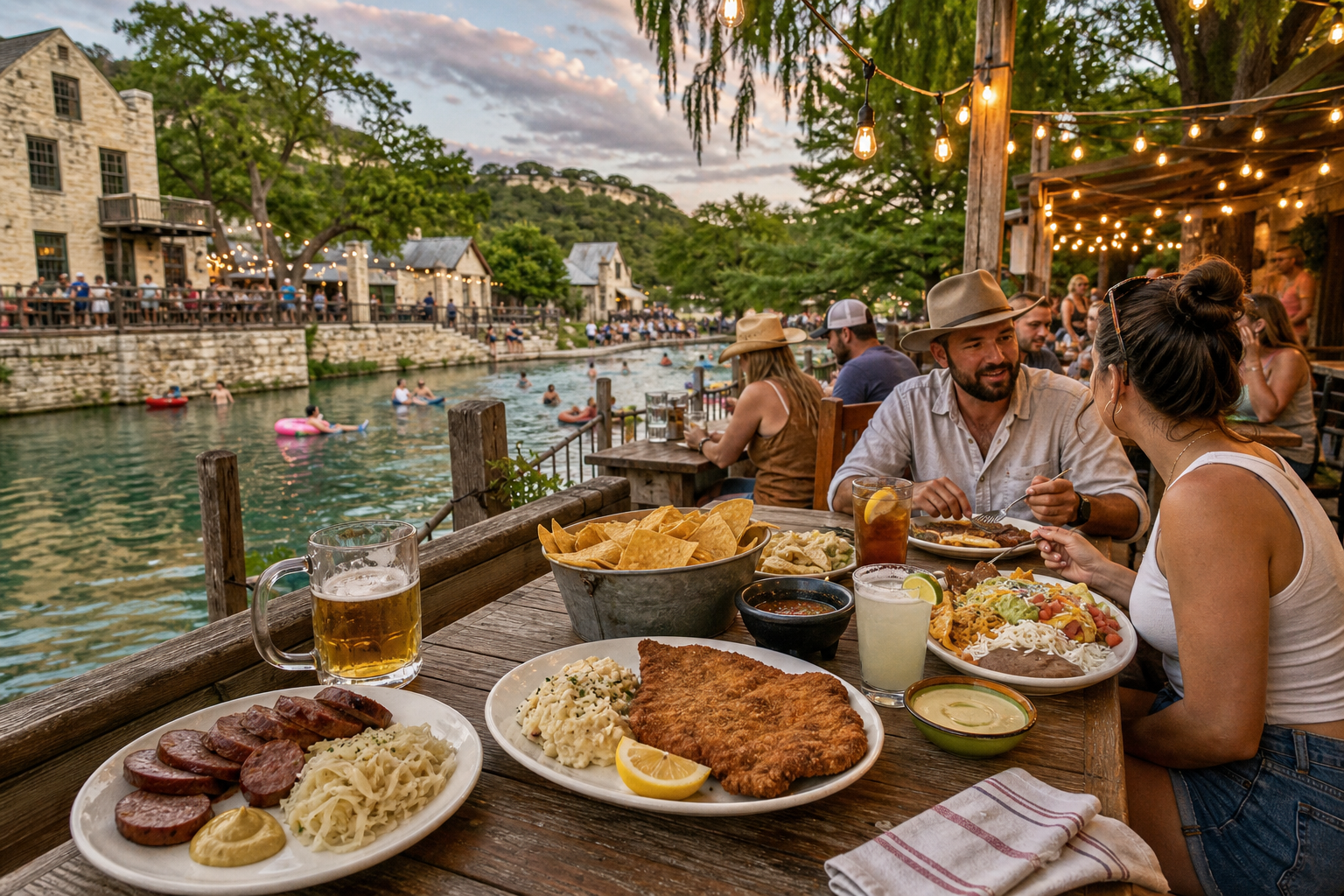
The dining scene in New Braunfels has grown well beyond its German roots, but those roots are still the best reason to eat here at least once.
Find your next great meal in New Braunfels
Explore New Braunfels restaurants by neighborhood, occasion, and cuisine so you spend less time deciding and more time eating well.
A city shaped by rivers, settlers, and sausage
New Braunfels sits on IH-35 between San Antonio and Austin, roughly 30 minutes from one and 45 from the other. It was founded by German settlers in 1845, and that heritage never left the table. Schnitzel, bratwurst, and sauerbraten still appear on menus here in ways you won't find in most Texas cities. The annual Wurstfest, which began in 1961 as a ten-day celebration of sausage, German music, and beer, remains the city's most widely known event and a useful lens for understanding what New Braunfels considers worth preserving. The Comal and Guadalupe rivers draw summer crowds who come to tube and swim in spring-fed water, and those crowds have pushed the restaurant scene to expand steadily. Today the city holds more than 370 restaurants reviewed on TripAdvisor, spanning everything from historic institutions to newer spots built for a fast-growing residential base.
The two districts every visitor should know
Most of the dining decisions in New Braunfels come down to two areas: the Gruene Historic District and downtown New Braunfels. Gruene, a preserved 19th-century village on the Guadalupe River, is where you'll find riverfront decks, live music at Gruene Hall, and restaurants that have been feeding visitors for decades. The Gristmill, a New Braunfels institution founded in 1977, overlooks the Guadalupe River from within the historic district and is one of the most recognizable addresses in the city. Gruene River Grill has operated in the heart of that same district since 2004, perched directly above the river. Downtown New Braunfels, a few miles away, has a quieter, more local character. Alpine Haus on South Seguin Avenue and Huisache Grill and Wine Bar on West San Antonio Street anchor the downtown dining scene and draw regulars who aren't just passing through on a tubing trip. Knowing which district fits your day makes the choice much simpler.
German heritage dining still earns its place
The German culinary tradition here isn't nostalgia for its own sake. Alpine Haus, housed in a historic property in downtown New Braunfels, serves schnitzel, bratwurst, and sauerbraten in a setting that reflects the city's founding culture. These dishes are prepared with enough consistency and care that they draw both longtime residents and first-time visitors. If you've eaten German food only at festival stalls, a sit-down meal at a place like Alpine Haus is a different experience. It's worth noting that Wurstfest draws visitors from well beyond the region each year, which tells you something about how seriously the city takes this part of its identity. For visitors curious about similar dining traditions in other cities, the local restaurant guides on Local Eyes cover a range of regional food cultures across the country.
Beyond tradition: Tex-Mex, barbecue, and newer options
The dining scene has expanded significantly beyond German food. La Cosecha, a neighborhood Mexican restaurant, takes its name from the Spanish word for "the harvest" and builds its menu around interior Mexican cuisine using seasonal, local Texas ingredients. The menu centers on sharable dishes, making it a good fit for groups who want to try several things. Barbecue joints, Tex-Mex spots, and casual riverfront restaurants fill out the middle of the market, and newer upscale options have followed the city's residential growth. The Gruene Door Restaurant, located in Gruene Lake Village, describes itself as Gruene's only casual fine dining option, combining food, service, and atmosphere in a way that sets it apart from the more rustic riverfront spots nearby. The range now runs from river-casual to genuinely refined, which means the city can handle most dining occasions without anyone having to compromise. For visitors who also want to explore the Hill Country wine scene, local winery and tasting room guides are a natural complement to a New Braunfels trip.
Timing, crowds, and how to plan around both
New Braunfels is a long-time summer getaway destination in Central Texas, and the river crowds are real. Popular spots near Gruene and the Guadalupe can have significant waits on summer weekends, particularly at lunch when tubers are coming off the water. Arriving early or eating late sidesteps most of the wait at riverfront restaurants. Weekdays are noticeably calmer. Wurstfest, held each fall, brings its own surge of visitors to the downtown area. If you're visiting during that period, book ahead wherever reservations are accepted. For a more relaxed experience, downtown New Braunfels restaurants tend to draw a steadier, less seasonal crowd than the Gruene district. Planning your meal around your activity, rather than the other way around, is the most practical approach: eat in Gruene if you're spending the day on the river, and explore downtown if you're looking for something quieter and more local.
How to choose where to eat in New Braunfels
- 1
Anchor your meal to your activity
Start by knowing where you'll be spending most of your time. If you're tubing the Comal or Guadalupe, eating in the Gruene Historic District keeps everything in one place. If you're shopping, exploring the historic downtown, or just passing through on IH-35, downtown New Braunfels has a separate cluster of restaurants worth knowing. Matching your restaurant to your location saves time and often leads to a better overall experience.
- 2
Decide between institution and discovery
New Braunfels has restaurants that have been operating for decades and newer spots that reflect the city's recent growth. The Gristmill (founded 1977) and Gruene River Grill (since 2004) are institutions with established reputations. Newer options like La Cosecha bring a different kind of cooking to the table. Neither choice is wrong, but knowing which you're in the mood for narrows the list quickly. For similar decisions in other cities, the Conway restaurant guide walks through the same kind of local-versus-new tradeoff.
- 3
Pick a cuisine category that fits the group
The city covers German heritage food, Tex-Mex, barbecue, riverfront casual, and upscale dining. Groups with mixed preferences tend to do well at spots with broader menus or sharable formats, like La Cosecha's interior Mexican small-plates approach. Couples or smaller groups looking for a more composed experience have options like the Gruene Door Restaurant. Knowing the group's range before you search makes the final call much easier.
- 4
Check timing and plan for crowds
Summer weekends near the river are the busiest periods in New Braunfels dining. Riverfront restaurants in Gruene can have long waits at peak lunch hours. Arriving before noon or after 2 p.m. on busy days significantly reduces wait times. Wurstfest in the fall brings a separate wave of visitors to the downtown area. If you're visiting during either period, check whether your chosen restaurant takes reservations and book ahead if it does.
- 5
Use local listings to confirm hours and current details
Hours, menus, and seasonal closures change more often than printed guides can track. Before committing to a specific restaurant, check a current listing source. TripAdvisor's New Braunfels restaurant listings carry reviews from more than 20,000 visitors and are updated regularly. Local platforms like Local Eyes organize restaurants by neighborhood and category, which is useful when you want to browse by area rather than search by name.
Benefits
Two distinct dining districts
New Braunfels organizes naturally into the Gruene Historic District and downtown, each with its own character. Gruene is riverfront and lively; downtown is quieter and more local. Knowing which fits your day makes the choice straightforward.
Genuine German heritage on the menu
Unlike most Texas cities, New Braunfels has restaurants serving schnitzel, bratwurst, and sauerbraten as a living culinary tradition, not a novelty. Founded by German settlers in 1845, the city's food culture has real historical depth.
A range that covers most occasions
The dining scene spans river-casual to upscale fine dining, with Tex-Mex, barbecue, and interior Mexican options in between. Most groups and occasions can be matched to a restaurant without anyone having to settle.
Crowd patterns are predictable
Summer weekends near the river are the busiest times, and timing your meal around the tubing crowd (arriving early or late) is the single most reliable way to avoid long waits at popular Gruene spots.
More than 370 reviewed restaurants to choose from
With over 370 restaurants listed on TripAdvisor and more than 20,000 reviews, the city has enough depth that repeat visitors consistently find something new.
Dining situations visitors actually face
A family after a day on the Comal River
A group coming off a tubing run wants something casual, filling, and close to where they parked. The Gruene Historic District is the natural landing spot, with riverfront restaurants that handle large groups and noisy tables without issue. Arriving before the midday rush or waiting until mid-afternoon makes the experience much smoother. The area's German sausage plates and burgers are well suited to post-river appetites.
A couple looking for a proper dinner out
Visitors who want a more composed meal with attentive service have genuine options in New Braunfels. The Gruene Door Restaurant positions itself as the area's casual fine dining option, while Huisache Grill and Wine Bar in downtown New Braunfels offers a quieter, more local atmosphere. Downtown tends to be calmer than Gruene on weekends, making it a better setting for a relaxed dinner. For visitors planning a special occasion around a venue, the local wedding venue guide covers nearby options as well.
A visitor wanting to eat something authentically local
New Braunfels has a genuine culinary identity rooted in its German founding. Alpine Haus, housed in a historic property on South Seguin Avenue, serves schnitzel, bratwurst, and sauerbraten in a setting that reflects that history directly. This is not a themed restaurant but a continuation of a food tradition that has been part of the city since 1845. Eating here gives a visitor something they couldn't replicate at a chain or a generic Tex-Mex spot.
A group visiting during Wurstfest
Wurstfest, held each fall in downtown New Braunfels, draws visitors from across the region for ten days of German cuisine, music, dancing, and beer. The festival itself is the dining centerpiece during that period, but the surrounding downtown restaurants also see increased traffic. Booking ahead at sit-down restaurants during Wurstfest week is strongly advisable. Visitors who want to explore beyond the festival will find that downtown's regular restaurant scene is still accessible if they plan around peak festival hours.
New Braunfels restaurants: questions locals get asked most
Plan your New Braunfels meal before you arrive
New Braunfels has more dining depth than most visitors expect, and the Local Eyes guide helps you find the right spot for your specific day, group, and occasion. Browse restaurants by neighborhood and category to plan your meal before you arrive.